

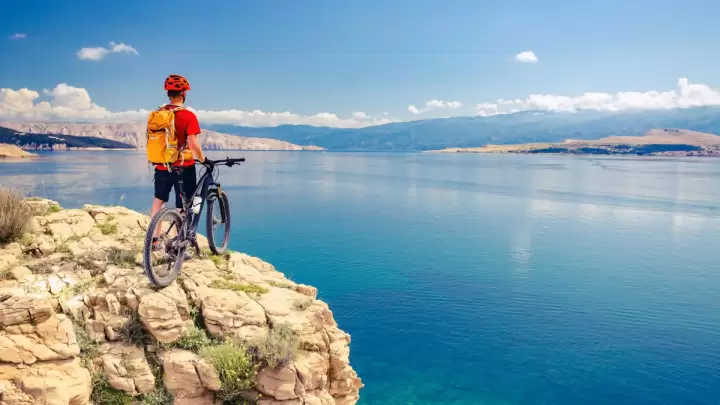
Cycling Croatia is more than a sport – it’s a lifestyle, a way to explore hidden corners of nature, historic towns, and Mediterranean islands while enjoying one of the most scenic cycling destinations in Europe. With a coastline stretching over 1,700 km, more than 1,200 islands, and a dramatic inland landscape of rivers, valleys, forests, and mountains, Croatia is perfectly designed for two-wheeled adventures.
Table of Contents
From gravel trails perfect for mountain biking to smooth coastal roads ideal for relaxed sightseeing, this country offers an incredible variety of routes tailored to every type of rider – whether you’re an experienced cyclist or simply looking for a scenic family ride. Among the most popular cycling regions are the sun-drenched peninsula of Istria, the green and aromatic islands of Kvarner, and the breathtaking Dalmatian coast, where islands and seaside paths make every ride a discovery. Cycling in Croatia means pedaling through striking contrasts: rocky coastlines, rolling vineyards, untouched forests, charming villages, and vibrant historic towns.
Every turn of the wheel reveals a blend of natural beauty and cultural heritage that can be experienced at your own pace. As a yacht charter company, we highlight cycling opportunities that are easily accessible right from the boat. A short ride from the marina can take you to secluded beaches, olive groves, or coastal viewpoints that showcase the Adriatic at its best. Of course, Croatia’s cycling story doesn’t stop at the sea. For those eager to venture inland, there’s much more to explore:
Gorski Kotar with its highland trails and dense forests The historic routes of Lika-Karlovac Dramatic ascents across the Dinaric karst mountains The golden fields of Slavonia, intersected by calm river valleys The castle-dotted hills and vineyards of central Croatia And finally, the lively cycling-friendly streets of Zagreb, the country’s capital. Whether you stay near the coast or explore deeper inland, cycling Croatia is an experience that transforms every journey into a story worth telling.
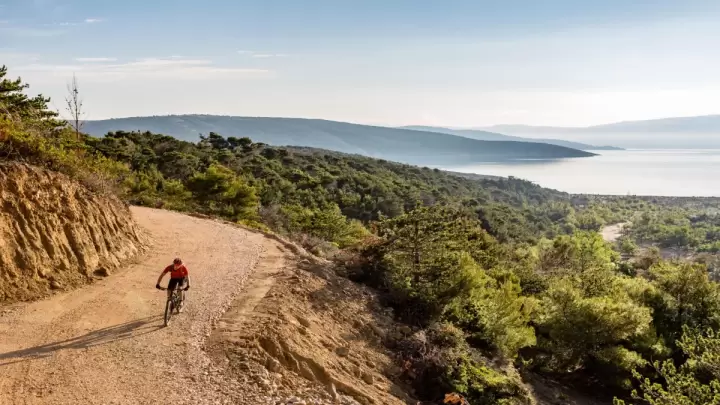
Istria Region
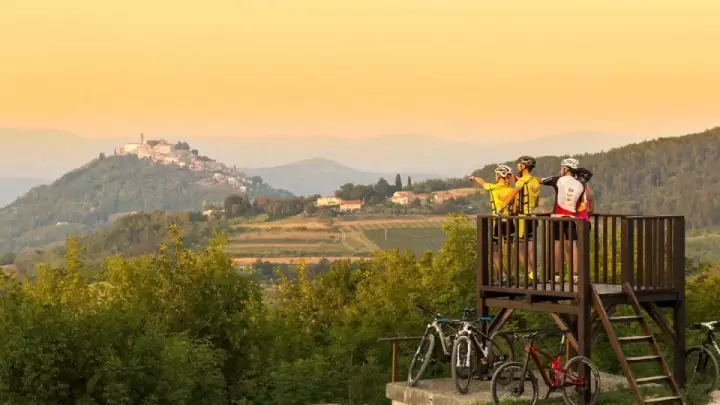
When it comes to Cycling Croatia, the Istrian peninsula is the perfect starting point. Located in the north of the Adriatic, Istria is often called the “Croatian Tuscany” thanks to its rolling hills, medieval hilltop towns, vineyards, olive groves, and coastal panoramas. This region combines history, gastronomy, and nature, making it one of the most versatile and rewarding cycling destinations in Croatia.Istria offers more than 500 km of marked cycling routes, ranging from relaxed coastal rides to challenging inland climbs. Cyclists here can explore UNESCO-listed monuments, Roman ruins, Venetian towns, and authentic stone villages, all while enjoying world-class wine and olive oil. The peninsula is also extremely bike-friendly, with signposted trails, rental shops, repair stations, and events catering to every type of cyclist.
Why Cycle in Istria?
- Variety: MTB, road cycling, trekking, and family routes.
- Heritage: Roman amphitheater in Pula, Venetian palaces in Rovinj, medieval towns like Motovun.
- Gastronomy: Istrian truffles, Malvazija wine, olive oil, seafood.
- Scenery: hilltop panoramas, Adriatic coastline, protected forests, and valleys.
- Accessibility: Excellent infrastructure and proximity to Italy and Slovenia.
Cycling Areas of Istria
Northwestern Istria – Umag, Novigrad, Buje & Brtonigla
This part of Istria is a cyclist’s paradise with 19 well-marked trails suitable for all levels. The region’s highlight is the legendary Parenzana Trail, once a narrow-gauge railway connecting 33 Istrian towns between Trieste and Poreč. Today, it is a cycling route stretching over 123 km, combining gravel, tunnels, bridges, vineyards, and panoramic viewpoints.
- Parenzana Trail: The “Trail of Health and Friendship” offers a unique way to experience the heart of Istria. It is perfect for cycle-tourists and recreational riders, but also rewarding for endurance cyclists.
- Novigrad coastal routes: Family-friendly flat rides along the sea, passing beaches, promenades, and fishing harbors.
- Buje & Brtonigla trails: Inland climbs through vineyards and forests, excellent for MTB and gravel bikes.
This area is also known for its gastronomy – cycling itineraries can be paired with tastings of local wine, olive oil, and seafood specialties.
Poreč & Surroundings – Cycling Where History Meets the Sea
The Poreč area blends seaside cycling with routes through the fertile hinterland. Coastal trails connect towns like Tar, Vabriga, and Funtana, while inland rides pass through villages like Višnjan, Vižinada, and Kaštelir-Labinci.
- Cultural highlight: The UNESCO-listed Euphrasian Basilica, one of the best-preserved early Christian monuments in Europe.
- Sporting heritage: Poreč once hosted a stage of the Giro d’Italia, and cyclists can ride parts of that route.
- Route options: Leisurely coastal rides or medium-difficulty loops inland through vineyards and olive groves.
Rovinj, Bale & Kanfanar – Romance on Two Wheels
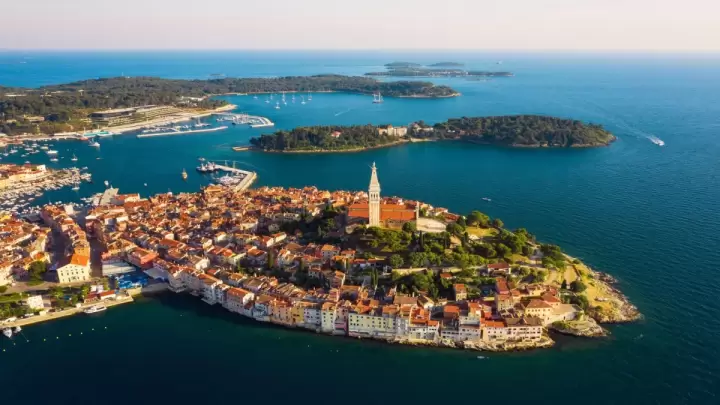
Rovinj is often called the most romantic town in Croatia, and cycling around it captures that spirit perfectly. The routes here are shorter and less demanding, making them ideal for families and leisure riders.
- Family-friendly trails: Gentle rides through pine forests, olive groves, and nature reserves.
- Palud Ornithological Reserve: Birdwatching combined with relaxed cycling.
- Casanova Trail (22 km): Named after the famous adventurer, this trail offers a mix of history, nature, and scenic stops.
- Captain Morgan Trail (60 km): For more experienced cyclists, this route blends legend, history, and panoramic climbs.
Vrsar & Funtana – Coastal Relaxation
The area around Vrsar and Funtana offers five well-marked trails perfect for families and casual riders.
- Kontija Forest Ride: A shaded, relaxing trail through a 100-year-old forest, leading to Lim Bay, one of the most picturesque fjord-like bays in Croatia.
- Flat coastal routes: Perfect for combining cycling with swimming and seaside stops.
Pula & Medulin – Southern Istria’s Scenic Rides
At the southern tip of Istria, cycling combines history, nature, and seaside charm.
- Pula: Ride through a city rich in Roman heritage, including the famous Pula Arena, one of the world’s best-preserved amphitheaters.
- Cape Kamenjak: A protected nature park with trails offering dramatic coastal views, hidden coves, and Mediterranean flora.
- Medulin Riviera: Flat family-friendly rides along the sea, with options to extend inland to Marčana and Rakalj.
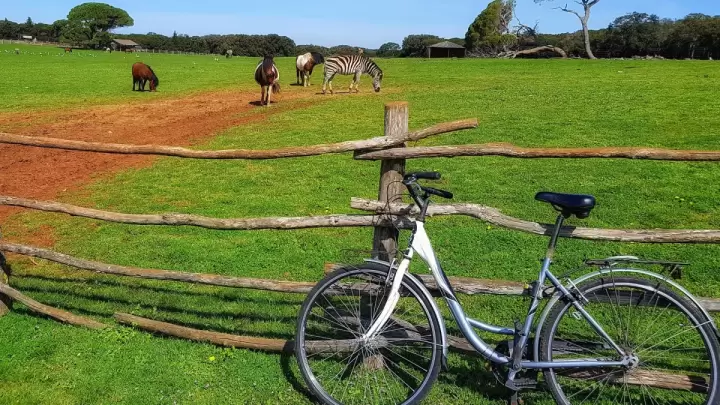
- Fažana & Brijuni National Park views: Coastal routes with breathtaking panoramas of the Brijuni Islands.
Labin & Rabac – Adventure and Adrenaline
For cyclists who want a challenge, eastern Istria delivers. The terrain around Labin and Rabac is steep and rugged, offering some of the most demanding but rewarding trails in the region.
- Gračišće to Rabac trail: A challenging but scenic ride connecting medieval inland towns to the Adriatic coast.
- Skitača climb: A tough ascent with incredible views of Kvarner Bay and Istria’s rugged coast.
- Rabac MTB trails: Technical routes for advanced mountain bikers, often used for competitions and events.
Island Connections from Istria
While Istria itself is a peninsula, its proximity to the Kvarner islands (Cres, Lošinj, Krk) means cyclists can easily combine their Istrian adventure with island-hopping. Ferries connect Brestova (Istria) with Porozina (Cres), opening the door to even more cycling opportunities.
Events & Cycling Tourism in Istria
Istria has developed into a premier cycling hub, hosting numerous events and races:
- Istria Granfondo: An international cycling marathon starting from Umag and Novigrad.
- Parenzana Marathon: Celebrating the famous trail with participants from all over Europe.
- Rabac MTB Downhill competitions: Adrenaline events attracting mountain bikers.
Conclusion – Why Istria is Perfect for Cycling
Cycling in Istria is the perfect blend of sport, nature, and culture. From family-friendly flat coastal trails to steep mountain climbs, from UNESCO heritage sites to quiet olive groves, the peninsula has something for everyone. Add to that Istrian gastronomy – wine, truffles, olive oil – and you have the recipe for an unforgettable cycling holiday. Check out our Istria 7-day itinerary , a carefully curated route that blends the region’s coastal elegance with authentic Adriatic charm.
Kvarner Region: Islands, Mountains & Culture on Two Wheels
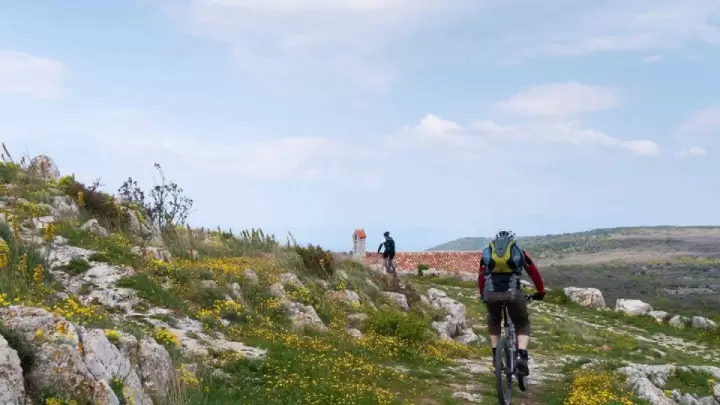
When you think of Cycling Croatia, the Kvarner region stands out as one of the most diverse and thrilling destinations. This unique area stretches from the Adriatic islands of Krk, Rab, Cres, and Lošinj to the coastal towns of Rijeka, Crikvenica, and Novi Vinodolski, reaching deep inland to the mountainous landscapes of Gorski Kotar and the Vinodol Valley. Cycling here is about contrasts: rugged island terrain, soft sandy trails, medieval castles, fragrant pine forests, and vibrant cultural hubs.Kvarner has firmly placed itself on the world cycling map thanks to international events like the 4 Islands MTB Stage Race and the UCI MTB Downhill World Cup, but it is equally welcoming to families, leisure riders, and cycle-tourists looking to combine sport with seaside relaxation. With more than 1,500 km of marked cycling routes, Kvarner offers an experience for everyone.
Why Cycle in Kvarner?
- Islands & Coastline: From sandy Rab to rocky Cres and pine-covered Lošinj.
- International Competitions: MTB stage races and world-class downhill events.
- Cultural Cycling: Medieval castles on the Routes of the Frankopans.
- Diverse Landscapes: Seaside promenades, mountain climbs, forest trails.
- Food & Wine: Famous island lamb, Kvarner scampi, local wines.
Cycling Destinations in Kvarner
Krk – The Golden Island
Krk is the largest island in the Adriatic and the best-developed cycling destination in Kvarner, with over 300 km of signposted routes.
- Coastal cycling: From Krk Town to Baška, passing beaches, harbors, and vineyards.
- Inland adventures: Routes through old villages, olive groves, and dry-stone landscapes.
- Wine roads: The area of Vrbnik is famous for the Žlahtina white wine – a perfect stop for cyclists.
- Difficulty range: Everything from flat seaside loops to steep climbs above Baška Bay.
Cres – Wild, Remote, and Authentic
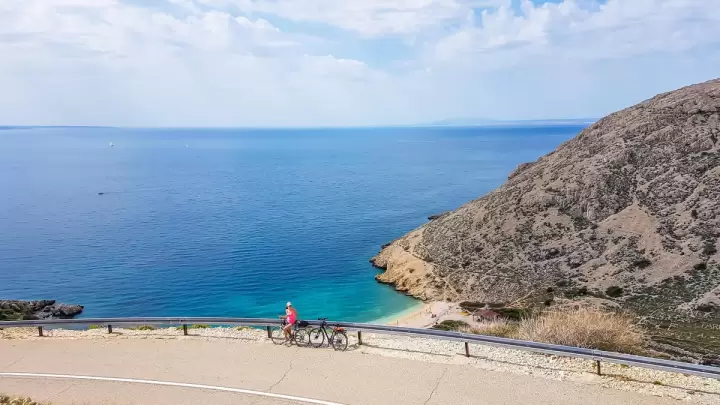
Cres is the island of wilderness and solitude, ideal for cyclists who want to disconnect.
- Routes: Quiet asphalt roads and MTB trails passing oak forests, karst landscapes, and hilltop villages.
- Highlight: The climb to the village of Lubenice, perched 380 m above the sea, offering dramatic views.
- Cycling vibe: Remote, raw, and adventurous – suited for MTB and experienced riders.
Lošinj – The Island of Vitality
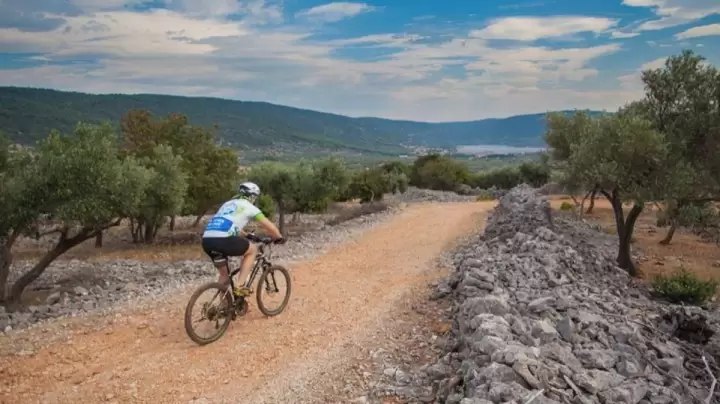
Lošinj is famous for its clean air, pine forests, and healing climate, making it an excellent leisure cycling destination.
- Family-friendly routes: Flat seaside rides connecting Mali Lošinj and Veli Lošinj, perfect for relaxed sightseeing.
- Promenades: Shaded pine-covered paths along the coast, excellent for trekking and recreational cycling.
- Connection with Cres: Cross the historic Osor bridge and combine both islands in one cycling trip.
- International recognition: Lošinj hosted the UCI MTB Downhill World Cup 2018, proving its cycling credentials.
Rab – The Green Island with Sandy Beaches
Rab is unique among Adriatic islands thanks to its sandy beaches and lush vegetation.
- Komrčar Park Forest: Easy trails through shaded greenery, ideal for families.
- Rab–Lopar routes: Coastal paths leading to sandy bays, lagoons, and scenic viewpoints.
- Cycling character: Softer terrain, perfect for families and recreational riders.
Smaller Islands – Hidden Treasures
Beyond the main four, Kvarner hides smaller islands that offer authentic off-the-beaten-path cycling.
- Susak: An island of sandy soil, unlike any other in Croatia.
- Ilovik: Known as the “island of flowers,” with peaceful trails and minimal traffic.
- Unije: A tranquil island with car-free routes.
- Plavnik, Prvić, Goli Otok, and Sv. Grgur: Rugged, untamed landscapes for adventurous explorers.
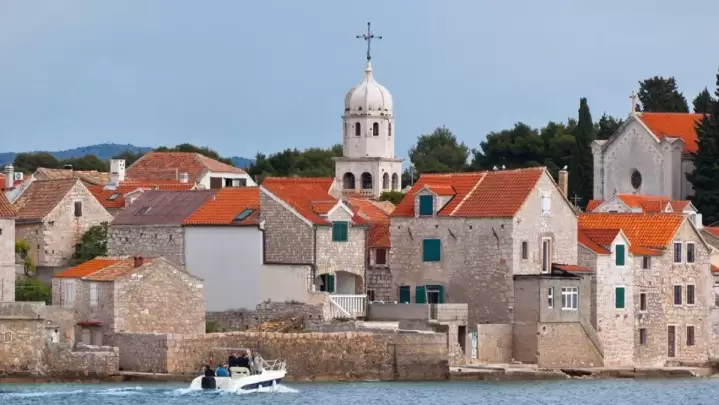
Mainland Cycling in Kvarner
Rijeka – The Cultural Hub
Rijeka, Croatia’s third-largest city and the European Capital of Culture 2020, is a great starting point for cycling in Kvarner.
- Urban cycling: Explore Rijeka’s harbor, historic architecture, and seaside promenades.
- Routes of the Frankopans: A unique cultural itinerary linking 17 castles and three sacral complexes across Rijeka, Vinodol, Krk, and Gorski Kotar.
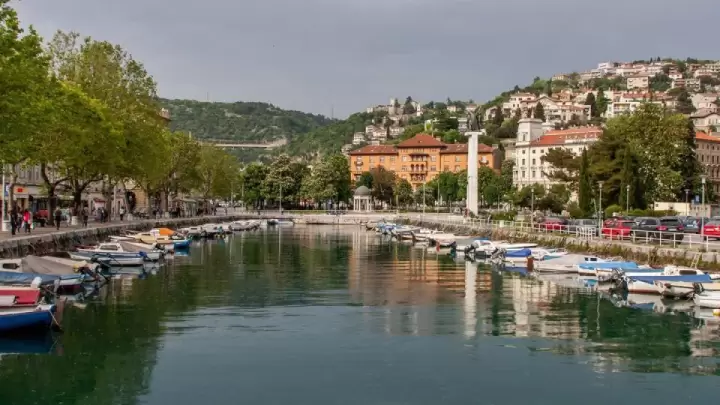
Crikvenica Riviera & Novi Vinodolski
The Crikvenica Riviera is a favorite for families and leisure cyclists, with flat coastal trails and well-developed cycling infrastructure.
- Seaside promenade routes: Perfect for easy rides with plenty of swimming stops.
- Inland trails: Medium-difficulty rides into the Vinodol Valley, known for vineyards, forests, and medieval ruins.
- Total network: Around 300 km of cycling paths.
International Events That Put Kvarner on the Map
- 4 Islands MTB Stage Race: Every April, cyclists race across Krk, Rab, Cres, and Lošinj, combining technical trails, rocky climbs, and Adriatic panoramas. It is one of Europe’s most prestigious MTB races.
- UCI MTB Downhill World Cup (2018): Hosted on Lošinj, where riders conquered a technical downhill track from Sv. Ivan hill to Veli Lošinj harbor.
These events attract elite athletes and showcase Kvarner as a global cycling hotspot.
Conclusion – Why Cycle in Kvarner?
The Kvarner region is where Cycling Croatia becomes an adventure of contrasts. From world-class MTB competitions to family-friendly seaside promenades, from sandy Rab to wild Cres, from Rijeka’s cultural routes to Gorski Kotar’s mountain trails, the variety is unmatched. Embark on a voyage through northern Croatia’s most enchanting coastlines — from Pula’s Roman heritage to the serene islands of Lošinj and Cres. For a full route, check out our Istra and Kvarner 7 day itinerary and discover where to sail, anchor, and dine along this spectacular stretch of the Adriatic.
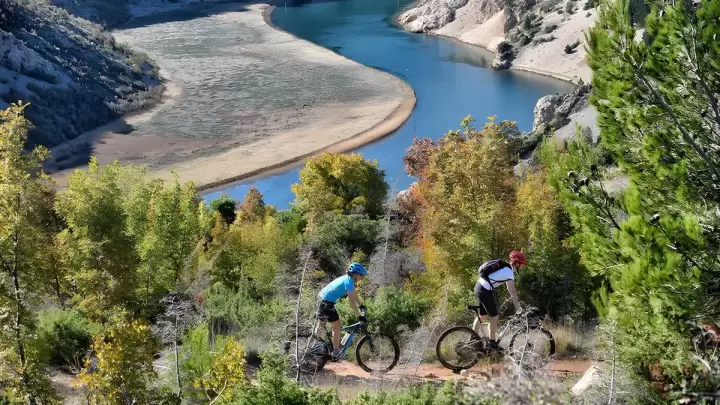
Zadar Region: Where the Adriatic Meets the Mountains
When it comes to Cycling Croatia, the Zadar Region is one of the most diverse playgrounds for cyclists in the Mediterranean. Here, rugged mountain slopes descend into fertile plains, karst plateaus fade into the Adriatic Sea, and a necklace of islands invites cyclists to explore their beauty at their own pace. The variety is endless – from technical MTB trails and long-distance road rides to gentle family tours along sandy beaches.
The Zadar area boasts more than 3,000 km of marked cycling routes, united under the brand Zadar Bike Magic. These trails are divided into three categories: 46 MTB trails for adventure seekers, 21 road routes for endurance riders, and 20 trekking and family trails for recreational cyclists. Each route is carefully marked, ensuring that riders can explore with ease while enjoying the combination of nature, history, and coastal charm.
Why Cycle in Zadar Region?
- Seaside & islands: Unique island-hopping cycling routes.
- Variety of terrain: Karst, mountains, fertile plains, coastal promenades.
- Island diversity: Pag’s lunar landscape, Dugi Otok’s cliffs, Ugljan’s pine forests.
- Culture & history: Roman ruins in Zadar, medieval towns, ancient olive trees.
- Nature parks: Telašćica, Lake Vrana, and Velebit foothills.
Pag Island – Between Stone and Sea
Pag is perhaps the most unique cycling island in Croatia. Its barren, wind-sculpted landscape looks almost lunar, with endless dry-stone walls dividing the rocky terrain.
- Pag Bridge to Lun route (60+ km): A demanding but rewarding road ride across the entire island.
- Highlights: Cheese-making villages, olive groves, salt pans, and the oldest olive trees in the world at Lun.
- Best time: Sunrise and sunset, when the barren stone glows golden.
Pag is perfect for cyclists who want an endurance challenge combined with unique cultural and gastronomic stops – Pag is world-famous for its cheese and lamb.
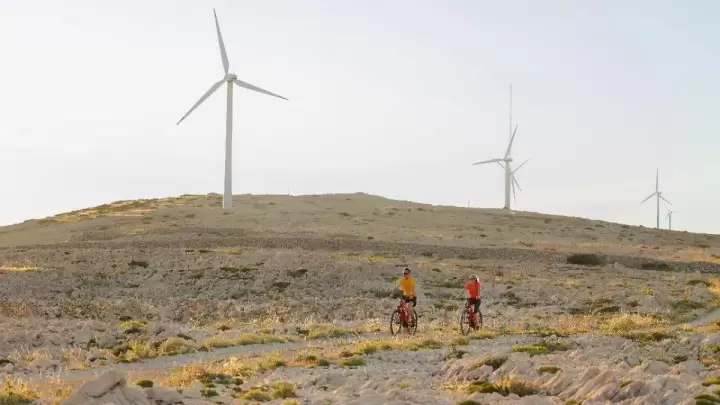
Dugi Otok – Cliffs, Beaches & Telašćica Nature Park
Dugi Otok (Long Island) is a cyclist’s dream for exploring raw beauty.
- Main road (44.5 km): Connects the island’s north and south, from Veli Rat Lighthouse to Telašćica Nature Park.
- Sakarun Beach: A must-stop, famous for its white sand and turquoise water.
- Telašćica Nature Park: The highlight – a protected area of towering cliffs, saltwater lakes, hidden coves, and pine forests.
Ugljan & Pašman – The Green Twins
Separated from the mainland by the Zadar Channel and connected by a bridge, Ugljan and Pašman are often called the “Green Twins.”
- Ugljan: Known for its pine forests, fishing villages, and scenic lookouts over Zadar. The routes are moderate and well-suited for recreational riders.
- Pašman: Calmer and less developed, with peaceful rides along olive groves and quiet coves.
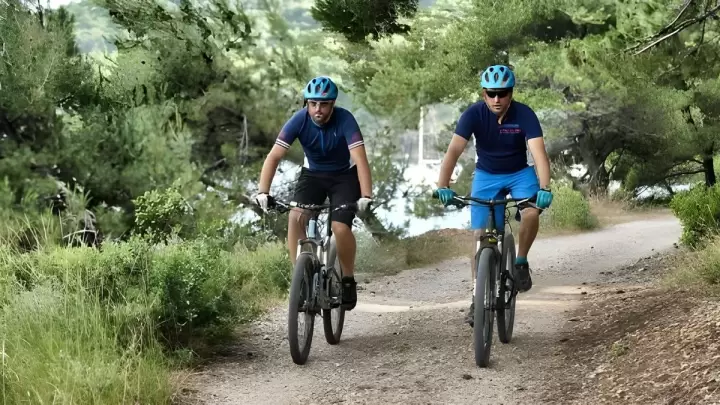
Vir Island – A Circular Ride by the Sea
Vir is connected to the mainland by a bridge, making it one of the easiest islands to explore.
- MTB 19 circular route (27.5 km, 215 m ascent): A complete tour of the island, offering 360° sea views.
- Character: A relaxed but scenic ride, suitable for recreational cyclists.
Smaller Islands – Premuda, Silba & Olib
- Premuda: A small island ideal for peaceful, slow-paced cycling.
- Silba: Known as the “island of captains,” it is completely car-free, making it a cycling paradise for families.
- Olib: Another car-free gem, dotted with olive groves and sandy beaches, perfect for easy cycling and relaxation.
These islands are best combined with sailing-and-cycling itineraries.
Nin, Biograd & Lake Vrana – Family-Friendly Cycling
Nin – The Oldest Croatian Royal Town
- T&F 07 Route (12.6 km): A flat seaside trail ideal for beginners and families.
- Highlights: Ancient salt pans, the Church of the Holy Cross, and panoramic views.
Biograd na Moru
- T&F 03 Route (22.7 km): Leads directly to Lake Vrana Nature Park.
- Extensions: Longer loops of 34 km and 48 km circle the lake.
Zadar City – A Cultural Cycling Stop
- Urban cycling: Ride along the seafront promenade, passing the Sea Organ and Greeting to the Sun.
- Historic core: Roman Forum, medieval churches, and Venetian walls.
- Extension: Coastal routes connect Zadar with nearby villages and beaches.
Conclusion – Why Zadar is a Cycling Paradise
The Zadar Region is offering a cycling variety unmatched in Croatia. From the moon-like island of Pag to the lush, car-free islands of Silba and Olib, from long-distance endurance rides on Dugi Otok to family-friendly loops in Nin and Biograd, every cyclist finds a trail suited to their style. For more inspiration and ideas read our Zadar region 7 day itinerary, your guide to exploring the best sailing routes, islands, and hidden gems of central Dalmatia.
Šibenik Region: Where Rivers, Islands & Mountains Meet
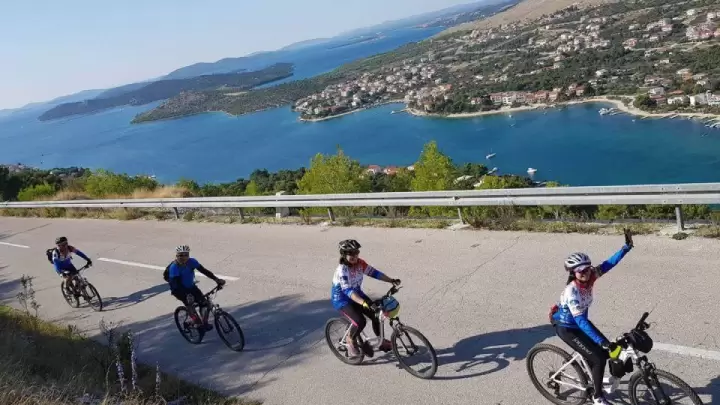
When speaking about Cycling Croatia, the Šibenik Region deserves a special place on the map. Located in the heart of Dalmatia, this area combines spectacular coastal towns, fertile river valleys, breathtaking islands, and rugged mountains. It is one of Croatia’s most versatile cycling destinations, offering over 2,450 km of marked trails across five cycling zones. From UNESCO-listed Šibenik and the waterfalls of Krka National Park to the remote island of Žirje and the panoramic climbs of Dinara, cyclists of every level will find their perfect route.
Why Cycle in Šibenik Region?
- Adriatic coastline: Seaside trails with charming harbors and beaches.
- Mountain challenges: Promina and Dinara, Croatia’s highest peak.
- National parks: Krka waterfalls, Vransko Lake bird reserve.
- Islands: Murter, Zlarin, Prvić, Žirje – each with a unique cycling story.
- Culture: Medieval Šibenik, Skradin, and UNESCO World Heritage sites.
Šibenik – Cycling Through UNESCO History
Šibenik is the cultural jewel of the region, home to the UNESCO-protected St. James Cathedral and four fortresses.
- St. Anthony’s Channel route: A scenic ride leading to the St. Nicholas Fortress, with breathtaking sea views.
- Urban cycling: Combine cycling with exploration of historic alleys, squares, and seafront promenades.
- Family-friendly options: Easy coastal rides around Šibenik Bay and nearby villages.
Cycling here means pedaling through centuries of history while enjoying Adriatic views.
Krka National Park – Waterfalls & Villages by Bike
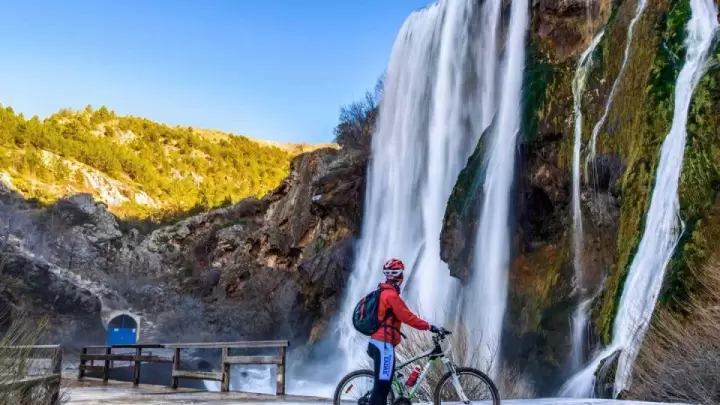
One of Croatia’s most iconic natural wonders, Krka National Park, offers cycling routes through waterfalls, canyons, and riverside villages.
- Skradin entrance: A cycling gateway into the park, with trails leading to waterfalls and mills.
- Krka river routes: Follow paths through vineyards, traditional hamlets, and panoramic viewpoints.
- Cultural stops: Visit monasteries, taverns, and local farms offering figs, almonds, cheese, and olive oil.
Skradin – The Gateway to Krka
Skradin is a small but charming town on the Krka River, known as one of the best cycling bases in Dalmatia.
- Riverside trails: Relaxed rides perfect for families.
- Food & wine: Famous for figs, almonds, cheese, and local wines.
- Connection to Krka NP: From Skradin, riders can easily explore the national park.
Vodice & Tribunj – Cycling Hotspots
Vodice is a major cycling hub, offering 14 recreational and MTB routes.
- Orlov Krug MTB trail: Internationally famous, part of the UCI World Cup.
- Tribunj coastal rides: Gentle seaside loops through historic fishing towns.
- Difficulty range: From flat family rides to steep MTB climbs.
Primošten – Cycling With Sea Views
Primošten is a coastal gem surrounded by vineyards and famous for its peninsular old town.
- Blue View Trail: A panoramic route offering spectacular views of the Adriatic.
- Sela circular road: A cultural loop through traditional inland villages.
- Character: Perfect for road cyclists and trekking enthusiasts.
Rogoznica & Dragon’s Eye Lake
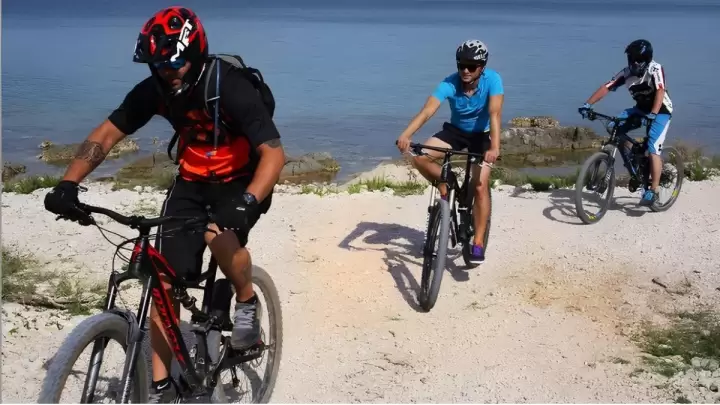
Rogoznica combines coastal cycling with unique natural attractions.
- Dragon’s Eye Lake: A mysterious saltwater lake surrounded by rocky trails.
- Seaside promenade routes: Family-friendly rides along Rogoznica’s coastline.
- Inland climbs: For MTB riders looking for extra challenges.
Island Cycling in Šibenik Archipelago
Murter – Cycling for Every Rider
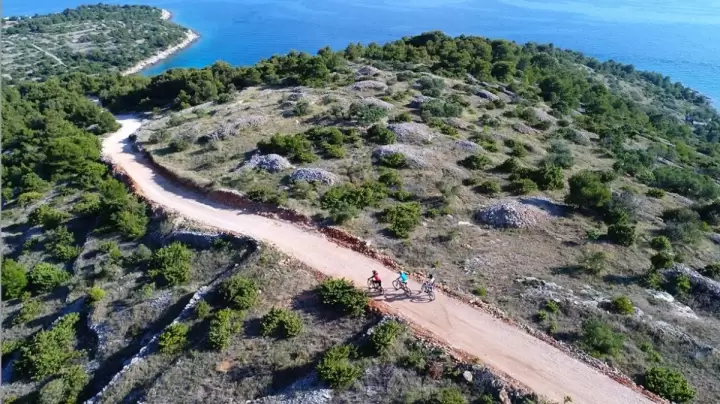
Murter, connected to the mainland by a bridge, is one of the most bike-friendly islands in Croatia.
- Trail 215 (Murter–Betina): Family-friendly, cultural ride.
- Trail 216 (Bodulska priča): Medium difficulty with authentic island charm.
- Trail 214 (Najljepši vidikovci – The Most Beautiful Viewpoints): Challenging, with panoramic views of Kornati Islands.
- Cultural stop: Visit the shipbuilding museum and explore traditional crafts.
Zlarin – The Coral Island
Zlarin is known for its coral tradition. Cycling routes pass through olive groves, small stone villages, and beaches.
Prvić – Island of Invention
Prvić is the birthplace of Faust Vrančić, inventor of the parachute. Cycling here combines history with short, family-friendly trails.
Krapanj – The Sponge Divers’ Island
This tiny island, only 1.5 m above sea level, offers short but unique cycling routes through sponge-diving heritage.
Žirje – The Remote Island Adventure
Žirje is the farthest island in the archipelago, offering marked trails and MTB routes. Every autumn, it hosts the popular cycling event Đir na Žir, attracting cyclists from across the country.
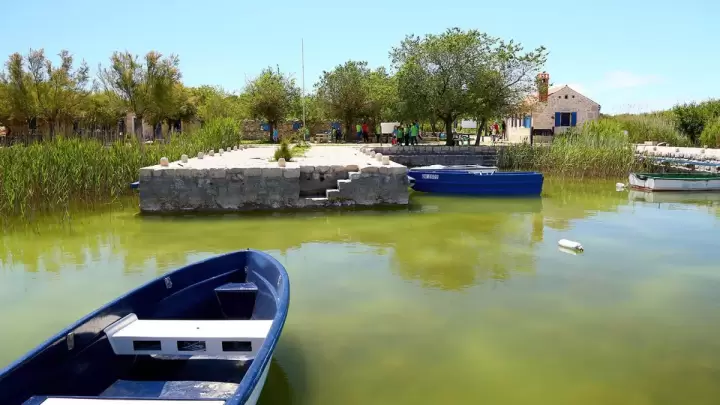
Vransko Lake Nature Park – Birdlife & Panoramas
Although shared with Zadar County, Lake Vrana is a key cycling attraction for Šibenik riders.
- Cycle Trail (48 km): A circular ride around Croatia’s largest lake.
- Ornithological reserve: Spot over 230 bird species.
- Kamenjak viewpoint: A highlight offering panoramic views of Kornati Islands.
- Annual event: The Vrana Bike Marathon held every May 1st.
Conclusion – Why Šibenik is a Cyclist’s Dream
The Šibenik Region is one of the most diverse cycling areas in Croatia. From the UNESCO treasures of Šibenik to the waterfalls of Krka, from family rides on Murter to endurance climbs on Dinara, it offers a blend of nature, history, and culture that few regions can match.
Split & Central Dalmatia Region
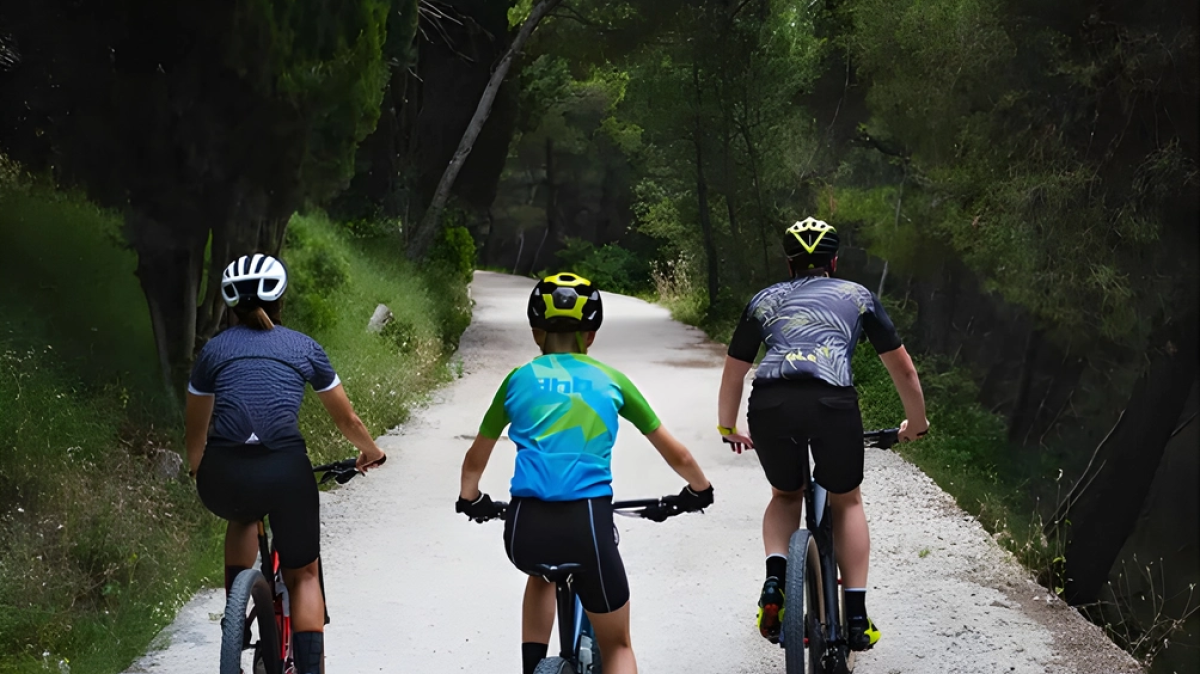
If there is one place that perfectly embodies the spirit of Cycling Croatia, it is the Split & Central Dalmatia region. Here, dramatic mountain ranges meet the Adriatic Sea, fertile valleys stretch inland, and islands with centuries-old traditions create a cycling paradise. From the bustling city of Split with its Roman heritage to the tranquil roads of Šolta, Brač, Hvar, and Vis, this region offers endless possibilities for every type of cyclist.
With thousands of kilometers of marked routes, ranging from family-friendly coastal promenades to demanding MTB climbs up Biokovo Mountain, Central Dalmatia is one of Europe’s top cycling playgrounds. The combination of history, natural beauty, and Mediterranean lifestyle makes cycling here an adventure for both the body and soul.
Why Cycle in Split & Dalmatia?
- Culture & heritage: Ride past Diocletian’s Palace, medieval fortresses, and ancient chapels.
- Island diversity: Brač, Hvar, Vis, and Šolta – each with unique cycling trails.
- Mountain challenges: Biokovo climbs and Cetina Canyon singletracks.
- Seaside beauty: Promenades, beaches, and fishing harbors.
- Food & wine: Local olive oil, seafood, and Dalmatian wines.
Split – The Cycling Heart of Dalmatia
Split is the region’s cultural and cycling hub, offering a mix of urban, coastal, and forested routes.
Marjan Hill – Split’s Green Oasis
- Trails: Short but steep climbs (125–178 m), perfect for MTB and gravel bikes.
- Highlights: Chapels, pine forests, and panoramic viewpoints across the city and islands.
- Why ride here: It’s the most accessible cycling escape within the city itself.
Kaštela – History & Vineyards
- Routes: Seaside promenades link seven historic towns, each with medieval castles.
- Inland climbs: Trails ascend into the Kozjak Mountains, weaving through vineyards and olive groves.
- Views: Sweeping panoramas over Kaštela Bay, Split, and surrounding islands.
Čiovo Island – Remote Beauty
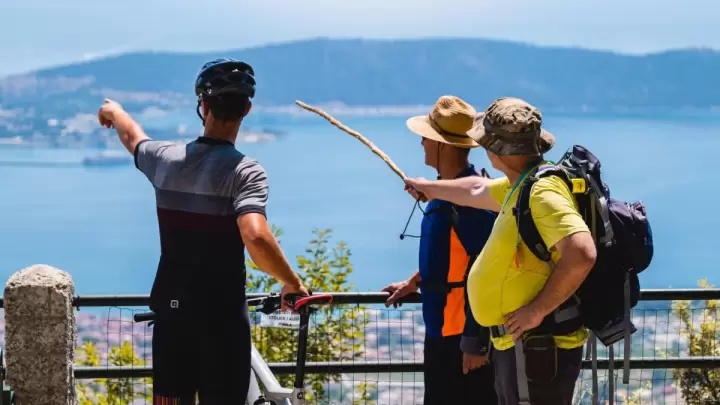
- Route highlight: Ride from Slatine to the Church of Our Lady of Prizidnica, a 16th-century sanctuary built into seaside cliffs.
- Terrain: Combination of asphalt, gravel, and forest paths with technical sections.
- Character: Ideal for cyclists seeking a mix of challenge and reward.
Island Cycling in Central Dalmatia
Brač – Accessible & Family-Friendly
Brač is one of the most bike-friendly islands in Croatia, offering something for every cyclist.
- Family trails: Supetar to Sutivan, and Bol to Zlatni Rat Beach.
- Inland climbs: Routes to Vidova Gora (780 m) – the highest island peak in the Adriatic.
- Cultural stops: Stone hamlets, chapels, vineyards, and olive groves.
- Character: Perfect for a mix of family leisure rides and serious training loops.
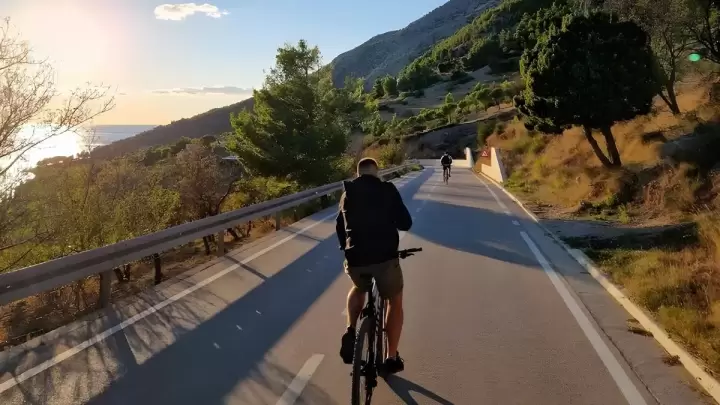
Hvar – Lavender Fields & Ridge Roads
Hvar is an island where culture and challenge combine.
- Leisure rides: The UNESCO-protected Stari Grad Plain, one of the oldest preserved agricultural landscapes in Europe.
- Climbs: Ascent to Sv. Nikola (628 m), the highest point on the island.
- Scenery: Lavender fields, stone villages, and coastal ridge roads with breathtaking views.
- Character: Ideal for endurance road cyclists and gravel riders.
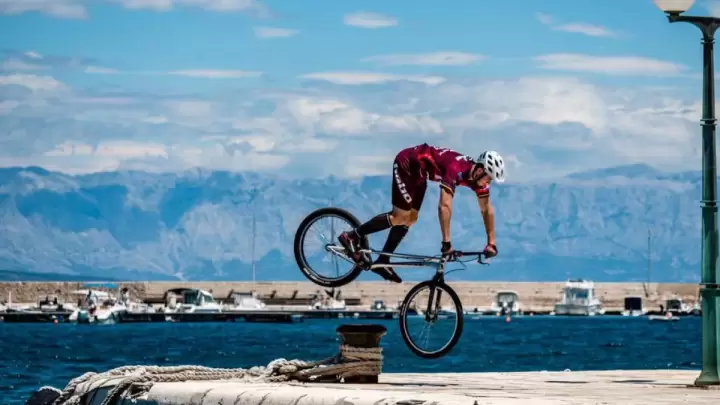
Vis – Authentic & Untamed
Vis is the most remote inhabited Croatian island, offering an authentic cycling experience.
- Routes: Over 250 km of cycling paths, from flat seaside loops to rugged inland climbs.
- Stops: Abandoned military tunnels, vineyards, and WWII fortresses.
- Character: A mix of relaxed rides and challenging routes, perfect for adventure seekers.
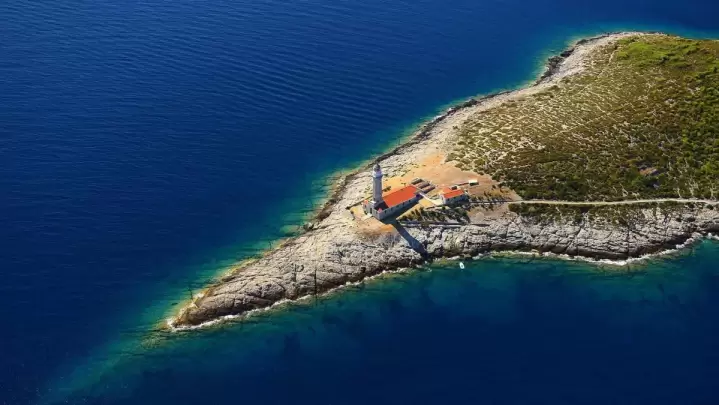
Šolta – A Quiet Escape
Šolta is a small island close to Split.
- Sunset Trail: A panoramic route with stunning evening views.
- Queen Teuta Route: Takes riders past ancient hillforts, chapels, and fishing villages.
- Gastronomy: Famous for olive oil and Dobričić wine, perfect for post-ride tastings.
- Character: Intimate and authentic, excellent for cycle-tourists.
Makarska Riviera – Cycling Between Biokovo & the Sea
The Makarska Riviera is framed by the Adriatic coast on one side and the mighty Biokovo Mountain on the other.
- Coastal rides: Flat promenades through villages like Brela, Baška Voda, and Tučepi.
- Biokovo climbs: Routes leading to the Biokovo Skywalk (1,228 m) – a glass viewpoint overlooking the Adriatic.
- Mixed terrain: Botanical gardens, seaside promenades, and mountain paths.
- Character: A thrilling mix of road and MTB cycling.
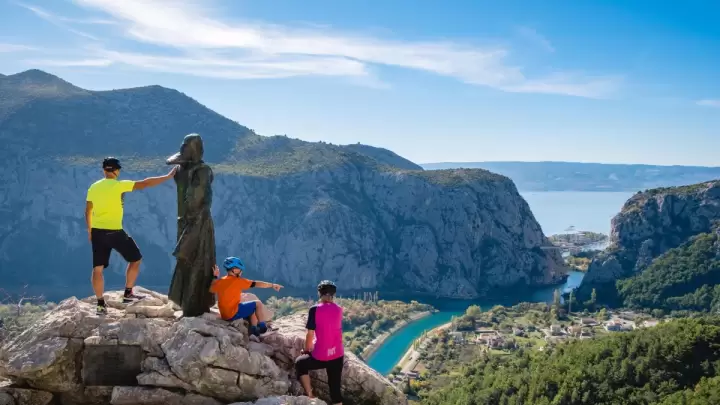
Omiš & Cetina Canyon – Adventure Capital of Dalmatia
Omiš, at the mouth of the Cetina River, is a true adventure hub.
- River routes: Family-friendly loops along the Cetina.
- Canyon roads: Dramatic climbs above Lokva Rogoznica and into the mountains.
- MTB trails: Rocky singletracks through forests and karst terrain.
- Character: Adrenaline-filled cycling with plenty of technical challenges.
Conclusion – Why Cycle in Split & Central Dalmatia
The Split & Central Dalmatia region is the ultimate cycling destination in Croatia. From Split’s urban routes and historic landmarks to the island escapes of Brač, Hvar, Vis, and Šolta, from the seaside beauty of the Makarska Riviera to the rugged adventures of Cetina Canyon, the diversity is unmatched.
Dubrovnik & Southern Dalmatia Region
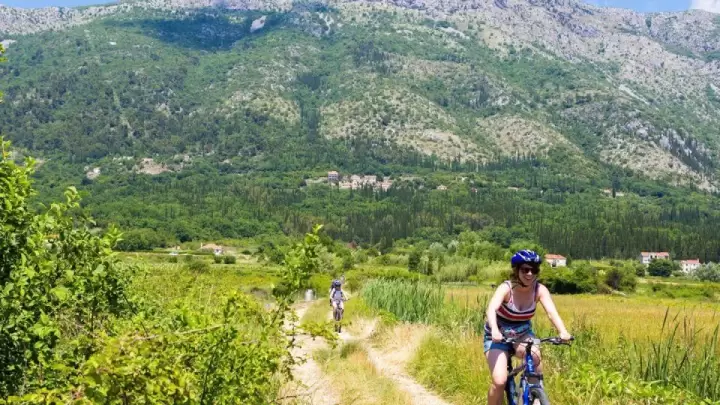
When most travelers think of Dubrovnik, they imagine the UNESCO-protected medieval walls, stone streets, and panoramic views over the Adriatic. But for cyclists, this southernmost part of Croatia is a treasure chest of diverse routes that blend coastal beauty, rural traditions, fertile valleys, and island adventures.
The Dubrovnik & Southern Dalmatia region offers something for every rider: flat family-friendly trails around lakes, long-distance road rides across vineyards, challenging MTB climbs up remote hills, and tranquil car-free islands perfect for relaxed cycling. The Mediterranean climate allows for cycling nearly year-round, making this one of the best regions in Europe for two-wheeled exploration.
Why Cycle in Dubrovnik Region?
- Coastal and island variety: Lakes, peninsulas, and archipelagos.
- Routes for all levels: From easy seaside trails to challenging mountain ascents.
- Island escapes: Korčula, Mljet, Lastovo, and the Elaphiti Islands.
- Gastronomy: Vineyards of Pelješac, seafood specialties, olive oil.
- Cultural depth: Roman remains, medieval fortresses, aristocratic summer residences.
Baćina Lakes & Neretva Valley – Flat and Scenic
Near Ploče, the Baćina Lakes form a cycling paradise for beginners and families.
- 10 km circular trail: Loops around five of the seven lakes, dotted with rest areas, springs, and lookouts.
- Activities: Combine cycling with boat rides, swimming, or photo safaris.
- Connection: The trail easily links with the Neretva Valley, known as the “Croatian California.”
- Cultural stops: The town of Metković and the village of Vid, home to the Narona Archaeological Museum with Roman remains and marble statues.
Pelješac Peninsula – Wine Roads & Napoleon’s Trail
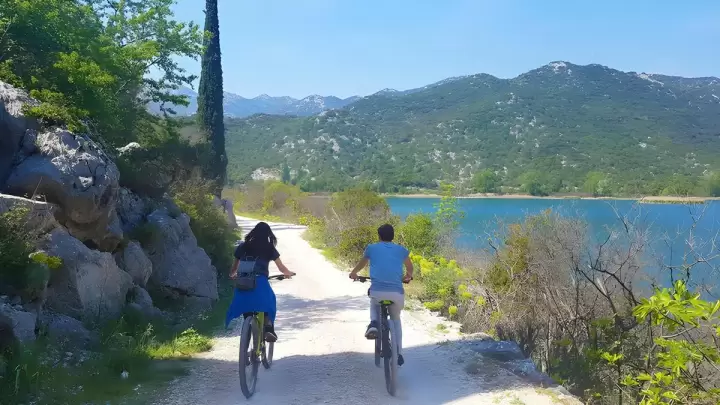
The Pelješac Peninsula is a haven for cyclists who love to combine sport with gastronomy.
- Napoleon Road: A historic route stretching between Ston and Ponikve, with panoramic views of vineyards and the sea.
- Ston: Famous for its medieval walls and saltworks.
- Orebić area: Trails through olive groves and seaside paths.
- Wine stops: World-class reds like Dingač and Postup, grown on the steep sunny slopes.
Korčula Island – Medieval Cycling Gem
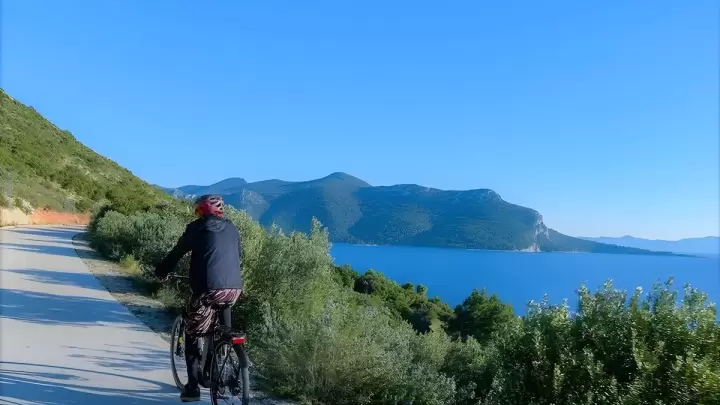
Korčula is one of the best cycling islands in Croatia, combining history, nature, and modern infrastructure.
- Routes: Dozens of marked trails across Lumbarda, Blato, Vela Luka, Smokvica, and Korčula Town.
- Scenery: Vineyards, pine forests, medieval towns, and quiet coves.
- Cultural heritage: Korčula Town, linked to Marco Polo, is a highlight.
- Character: Versatile – from family loops to demanding endurance rides.
Mljet – Cycling Through a National Park
Known as the “greenest Croatian island,” Mljet offers serene cycling inside its National Park.
- Veliko & Malo Jezero loop (8 km): Easy route around the saltwater lakes with views of St Mary’s islet and its 12th-century monastery.
- Central road: A hilly option for more advanced riders, offering panoramas over pine forests and the Adriatic.
- Why ride here: A perfect blend of untouched nature and cultural history.
Lastovo – Remote Island Adventure
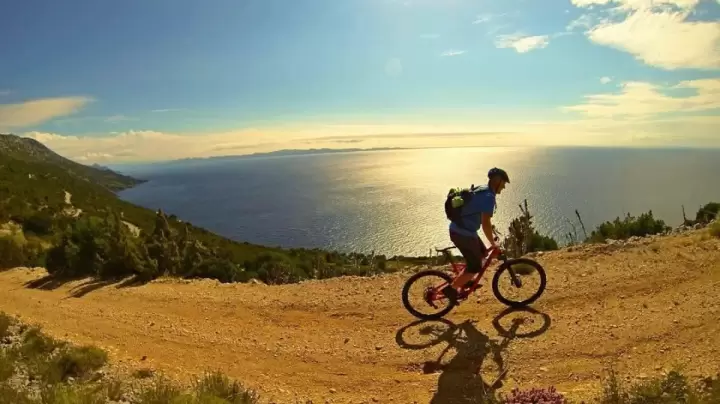
For cyclists who crave peace and wilderness, Lastovo Islands Nature Park is the ultimate destination.
- Trails: Quiet asphalt and gravel roads across vineyards, olive groves, and stone hamlets.
- Highlight: The Lastovo–Hum trail (20 km) climbs to the island’s highest peak, rewarding riders with views across the Adriatic.
- Character: Authentic and off-the-beaten-path, with little traffic and stunning stargazing (Dark Sky Park).
Konavle Valley – Rural Heritage Rides
South of Dubrovnik, Konavle is a fertile valley framed by the Sniježnica Mountain.
- Cycling routes: Three main trails connect olive groves, vineyards, citrus orchards, and riverside mills.
- Villages: Traditional stone houses and farms still preserve rural heritage.
- Gastronomy: Local wines, pomegranate juice, and authentic dishes served in family taverns.
Cycling here feels like a journey through time – authentic, peaceful, and steeped in tradition.
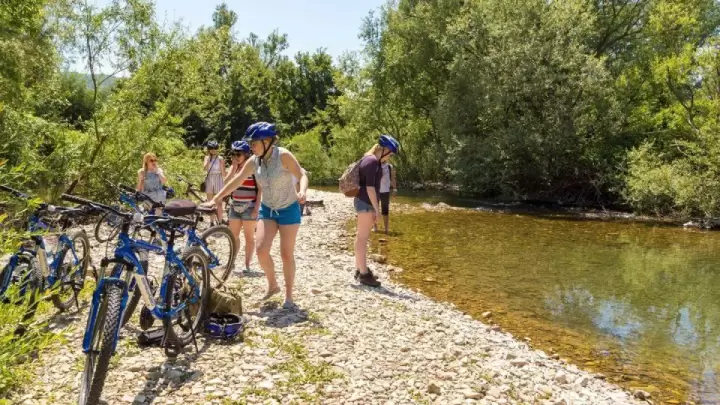
Elaphiti Islands – Car-Free Cycling Paradise
Just a short ferry ride from Dubrovnik, the Elaphiti Islands (Šipan, Lopud, and Koločep) provide easy day trips for cyclists.
- Šipan: Largest island, with a route between Suđurađ and Šipanska Luka showcasing aristocratic villas and olive groves.
- Lopud: Car-free, perfect for relaxed rides along beaches and promenades.
- Koločep: Known for narrow paths through pine forests and hidden coves.
These islands are excellent for family cycling and those looking for tranquility.
Dubrovnik City & Srđ Hill – Cycling with a View
Dubrovnik itself is mostly pedestrianized, but cyclists can explore the surroundings and climb Srđ Hill.
- The Srđ climb (4 km): A steep ascent with gradients up to 12%, rewarding with iconic panoramas over Dubrovnik’s terracotta rooftops, walls, and islands.
- Dubrovnik Littoral: Rural cycling roads outside the city, dotted with medieval necropolises and traditional hamlets.
Conclusion – Why Dubrovnik Region is a Must for Cycling Croatia
The Dubrovnik & Southern Dalmatia region is a cycling paradise where every route tells a story. From the peaceful Baćina Lakes and fertile Neretva Valley to the vineyards of Pelješac, the medieval streets of Korčula, the green trails of Mljet, the solitude of Lastovo, and the rural charm of Konavle, this area is as diverse as it is breathtaking.
Photos: HTZ, Ivo Bočina, Dejan Hren, Damir Kvajo, Luka Tambaca, Aleksandar Gospic, Drazen Breitenfeld, Daniel Pavlinovic, Boris Jovic
