

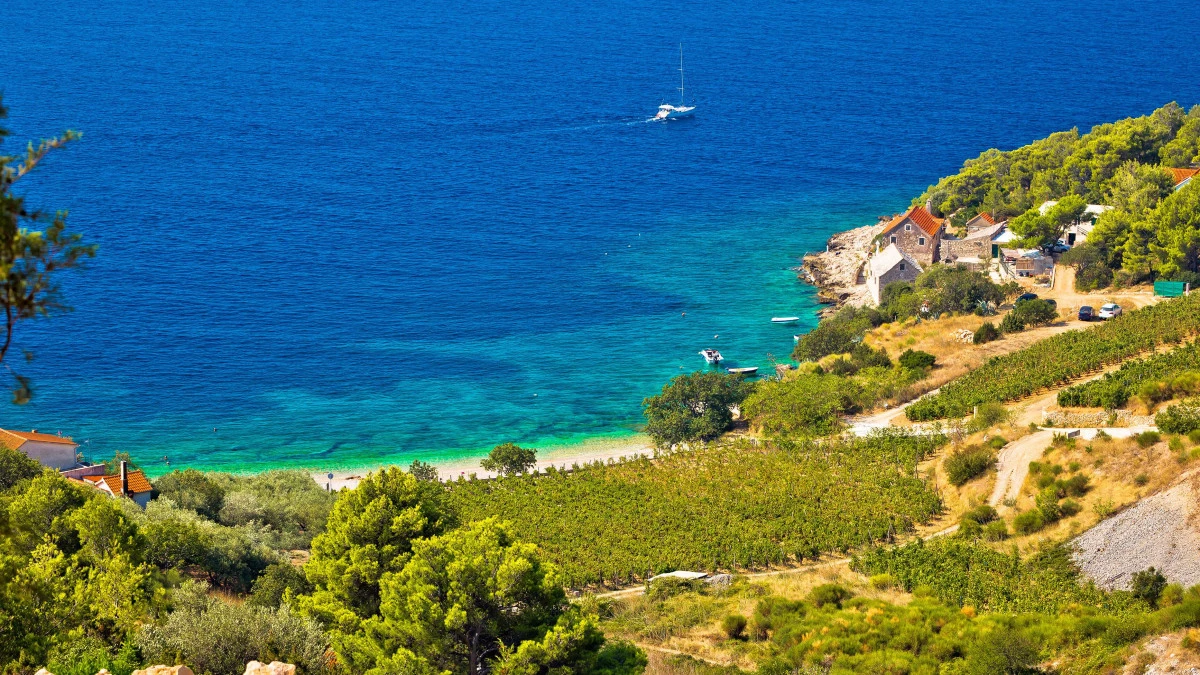
Croatia is a country with a deeply rooted wine culture that recognises true quality and enjoys wine with a sense of ease and tradition. For countless generations, wine has meant much more than a basic necessity — it has been part of family heritage, friendship, and celebration.
In the past, wine production and trade were often just by-products of weekend gatherings in small family vineyards. Only the quantities not reserved for “personal use” were sold. Most of the wine was enjoyed at lively social gatherings, as the old folk song from northwestern Croatia says: “No Zagorje man has ever sold his wine—his friends drank it all!” While statistics may not be as poetic, they paint an equally compelling picture: nearly half of Croatia’s vineyards are not registered for commercial wine production, meaning that the wine produced there is consumed exclusively at home. This passion for wine is evident in the fact that almost half of all Croatian wine never reaches the market, as it’s enjoyed privately among family and friends. The other half, intended for the market, is still relatively unknown outside the country. For decades, Croatia had minimal wine exports. With the breakup of Yugoslavia and the formation of new borders, wines that were once domestic suddenly became imports, creating an opportunity for Croatia’s own wine industry to grow steadily.
Even though the homeland production was severely affected by war, it couldn’t meet domestic demand as wine consumption continued to rise. Only in recent years, after large-scale vineyard renewal projects, have the first wine surpluses started to appear — marking the beginning of Croatia’s potential as a wine-exporting nation.
Table of Contents
Wine history
Winemaking in Croatia has a very long tradition that dates back at least 2,500 years. The oldest artefact proving the cultivation of grapevines and the production of wine is a coin from the island of Vis, located in the Adriatic Sea. It dates from the 5th century BC—one side of the coin depicts a grape cluster, and the other shows a wine amphora. Similar archaeological and written evidence can be found throughout the coastal regions, from Dalmatia to Istria.
Viticulture reached the continental part of Croatia several centuries later. It was spread partly by the Illyrians, partly by the Thracians, and later predominantly by the Romans. The most famous promoter of wine culture was Roman Emperor Marcus Aurelius Probus, who ordered vast vineyards to be planted from the Rhine Valley in Germany to the Danube region in Croatia. This passionate and persistent emperor, a great lover of the vine, ultimately paid dearly for his enthusiasm—he forced his own legionnaires to work on establishing and maintaining these vast vineyards, which angered them so much that they eventually executed him.
Wine production in coastal Croatia dates back to the 6th century BC, while in continental Croatia it began around the 2nd century AD. Over the centuries, vine cultivation was interrupted only in regions occupied by the Ottoman Empire in the 16th century. Once the Ottomans withdrew, viticulture flourished again. The final composition of today’s Croatian grape varieties, as in most of Europe, was heavily influenced by the phylloxera epidemic at the end of the 19th century. This devastating pest destroyed many indigenous varieties, especially in the continental regions. They were largely replaced by Austrian and German varieties, reflecting the rule of the Habsburg Monarchy. French varieties were introduced later, first in the early 20th century and again in the second half of the century. While both Istria and Dalmatia were also affected by phylloxera, their unique soil and climate conditions allowed many native grape varieties to survive — remaining dominant to this day.
Wine production – In Numbers
- Registered grape producers: 17,000
- Total vineyard area: 33,000 ha
- Wineries with controlled origin: 800
- Wines with controlled origin: 2,500
- Total controlled production: 61,000,000 liters
- Regional share by quantity: Continental 49%, Coastal 51%
- Regional share by number of producers: Continental 32%, Coastal 68%
- Total grape varieties grown: 200
- Number of indigenous varieties: 130+
- Leading varieties: Graševina, Malvazija, Plavac Mali
(The three leading varieties together cover 47% of all vineyard areas.)
The country first drew major international attention in 1996 when research revealed that the famous Californian Zinfandel grape is genetically identical to Croatia’s native varieties, Crljenak Kaštelanski and Tribidrag. Since then, Croatian wines have continued to impress on the world stage, combining centuries of tradition with modern craftsmanship.
Year after year, Croatian winemakers continue to impress judges and wine lovers alike with their craftsmanship, passion, and respect for tradition. These ongoing awards are a testament to Croatia’s unwavering dedication to producing wines of world-class quality, further solidifying its reputation as one of the most exciting and respected wine destinations in the world. Croatia has firmly established itself among the top 10 wine countries in the world, earning global recognition for its rich winemaking heritage and exceptional quality. Read more in our blog about award-winning Croatian wines.
Few countries in the world offer such diversity in wine, landscape, and culture as Croatia. This compact yet incredibly varied country is divided into two main viticultural zones — Coastal Croatia (Primorska Hrvatska) and Continental Croatia (Kontinentalna Hrvatska) — each producing wines as distinct as their landscapes.
Coastal Croatia
The coastal belt, known as Primorska Hrvatska, covers three main regions: Istria, the Croatian Littoral (Hrvatsko Primorje), and Dalmatia — itself divided into Northern, Central, Southern, and Hinterland subregions. With 31 designated vineyards and a dramatic range of microclimates, this area is the cradle of Croatia’s Mediterranean wine culture.
Unlike continental Croatia, where international grapes are common, the coast proudly cultivates indigenous varieties that have adapted to centuries of heat, wind, and limestone soils. The result: powerful reds, aromatic whites, and a true expression of terroir.
Istria – The Heart of Croatian Winemaking
Istria’s wine story is as old as its civilization. The Greeks named Kalavojna Bay near Pula — “Bay of Good Wine” — a fitting tribute to the region’s excellence.
Malvazija Istarska reigns supreme among whites: crisp, floral, and mineral-driven when young, but rich and complex when aged in oak. Teran, the red jewel of the peninsula, bursts with notes of cherries, dark berries, and forest herbs, balanced by lively acidity.
Modern Istria also excels with Merlot, Cabernet Sauvignon, and Muškat Momjanski, yet it is Malvazija and Teran that define its soul.
The Croatian Littoral – Elegance from Krk and Pag
Between Istria and Dalmatia lies the Croatian Littoral, where the islands of Krk and Pag preserve two rare native grapes.
- Žlahtina from Krk is light, floral, and refreshingly maritime — a perfect summer white.
- Gegić from Pag offers more complexity, combining minerality with ripe fruit and subtle spice.
Both varieties tell the story of survival, having endured centuries of decline and revival after the 19th-century phylloxera epidemic.
Dalmatia – The Soul of the Adriatic
Dalmatia stretches from Zadar to Dubrovnik, a sun-drenched land where vineyards cling to rocky slopes above the sea. It’s home to some of Croatia’s most iconic grape varieties — including Plavac Mali, Pošip, Grk, and Dubrovnik Malvasia — each reflecting its unique island or coastal terroir.
Northern Dalmatia
Here, the rocky hills around Primošten, Skradin, and Benkovac produce lively reds and bright whites.
- Babić, the native red of Primošten, yields deep, structured wines with vibrant acidity.
- Debit and Maraština lead among whites, the former fresh and crisp, the latter aromatic and soft.
Central Dalmatia
This is the cradle of Croatian winemaking — the islands of Hvar, Vis, and Brač have been growing vines since Greek times.
- Plavac Mali, a descendant of Zinfandel, delivers bold, full-bodied wines from steep, sunlit slopes like Dingač and Postup.
- Vugava from Vis, golden and aromatic, produces luscious whites once prized by Roman emperors.
Southern Dalmatia
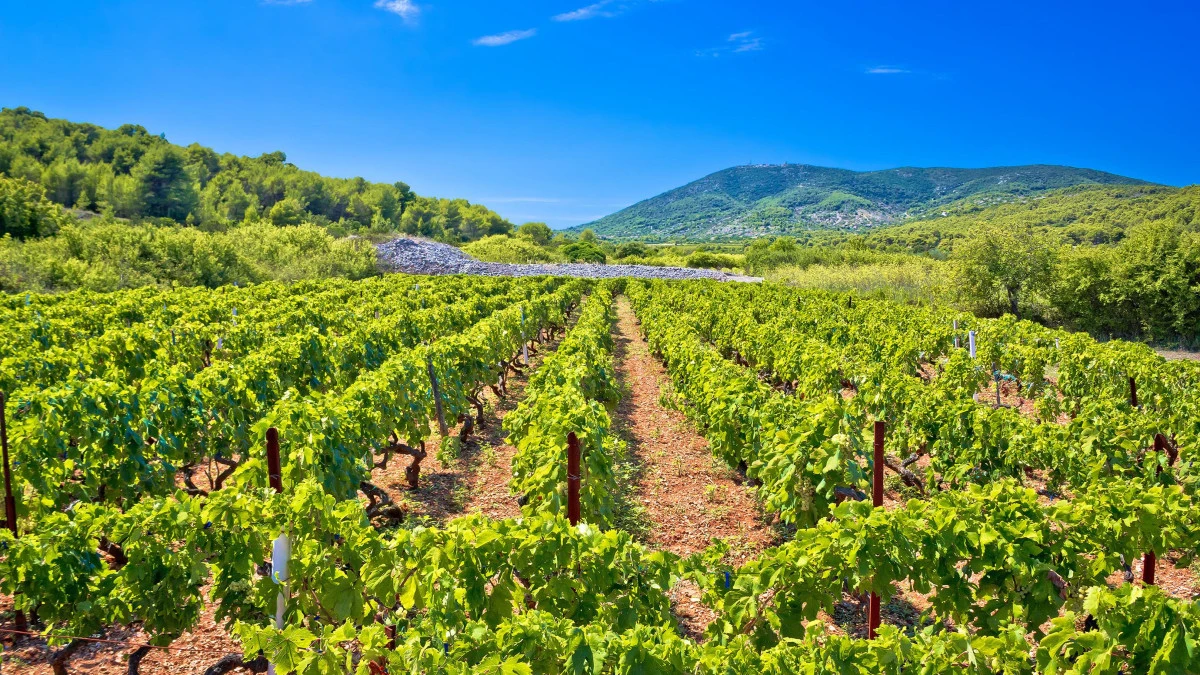
On Korčula and the Pelješac Peninsula, winemaking heritage runs deep.
- Pošip, native to Korčula, offers full-bodied whites with ripe tropical fruit and balanced acidity.
- Grk from Lumbarda dazzles with minerality and a delicate bitter finish.
- Dubrovnik Malvasia adds a touch of luxury — whether dry or in its dessert form, prošek.
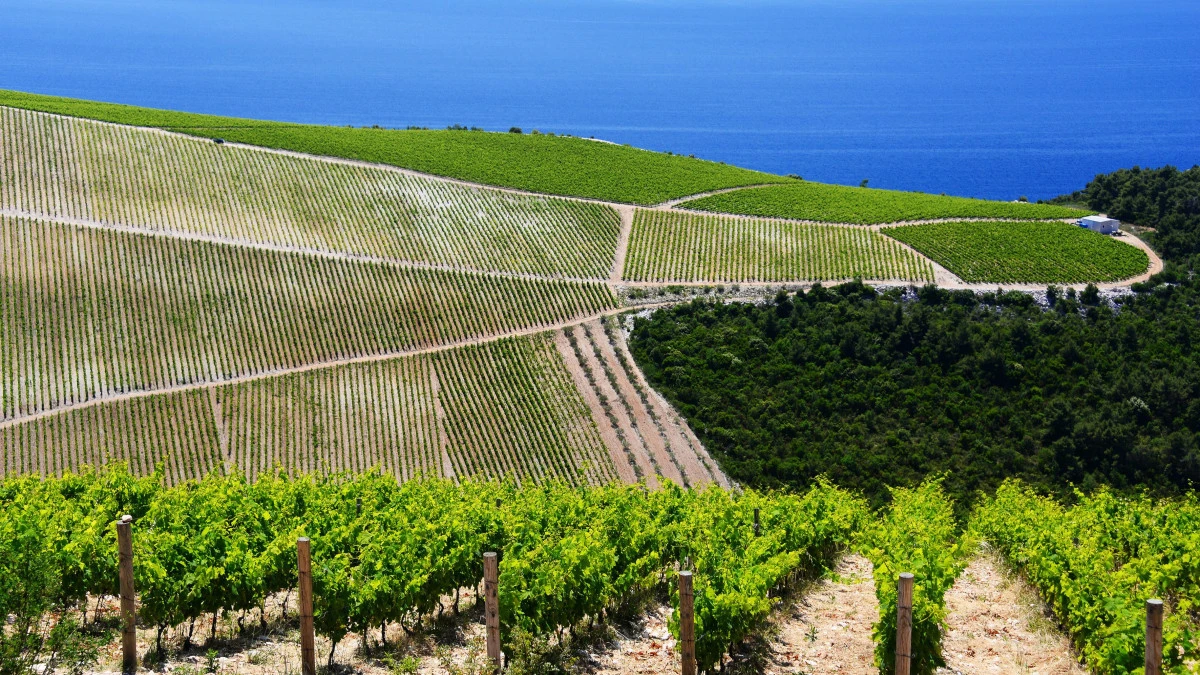
Dalmatian Hinterland
Beyond the mountains lies the Zagora, where the climate shifts to continental.
- Kujundžuša dominates as a light, floral white perfect for summer.
- Trnjak, a rediscovered red, brings soft tannins and ripe berry aromas.
Continental Croatia – The Land of Noble Whites
Heading inland, Croatia transforms into a world of rolling hills, fertile plains, and crisp continental air. Continental Croatia comprises four main regions — Podunavlje, Slavonia, Central Croatia (Moslavina, Pokuplje, Plešivica), and Northwestern Croatia (Zagorje & Međimurje) — with 35 official vineyards.
While the coast excels with bold reds, the interior is the kingdom of elegant white wines, led by Graševina, Riesling, Traminac, and Škrlet.
Podunavlje – The Vineyards of the Danube
In the far east, around Ilok, Erdut, and Baranja, vineyards rise gently above the Danube plains.
- Graševina dominates with floral-fruity aromas and crisp freshness.
- Traminac (Gewürztraminer) from Ilok is renowned for its aromatic intensity and balance.
The noble estates of the Odescalchi and Eltz families once exported wines to European courts — a tradition that continues with award-winning modern producers.
Slavonia – The Classic Soul of Croatian Whites
Kutjevo, Đakovo, and Feričanci define this historic region, where Cistercian monks revived viticulture in the 13th century.
Graševina remains the undisputed star — expressive, balanced, and versatile. Riesling, Chardonnay, and Pinot Noir also thrive here, producing wines of structure and age-worthiness. Slavonia’s cool autumns favor late harvests and ice wines, often celebrated at the Decanter World Wine Awards.
Moslavina – Heritage in Every Glass
Nestled between Sisak and Kutina, Moslavina has preserved its ancient grapes.
- Škrlet, the region’s signature white, delights with gentle fruit and refreshing acidity.
- Dišeća Ranina, with its muscat-like perfume, adds aromatic charm to local blends.
Small, family-run vineyards on Moslavačka Gora safeguard these ancient varieties for future generations.
Plešivica – Croatia’s Sparkling Star
Southwest of Zagreb, Plešivica is famed for its steep slopes and boutique wineries.
Its cool climate produces outstanding Riesling, Chardonnay, and Portugizac, along with some of Croatia’s best sparkling wines.
Dry Rieslings show floral freshness; late harvest versions reveal honeyed depth. Every November, locals celebrate the release of young Portugizac, the Croatian answer to Beaujolais Nouveau.
Međimurje and Varaždin – Aromatic Elegance
In Croatia’s far northwest, Sauvignon Blanc and Yellow Muscat rule the hills of Štrigova and Varaždin.
The wines are fragrant, crisp, and beautifully balanced — a testament to the region’s cool, humid climate and meticulous small-scale viticulture.
Hrvatsko Zagorje – The Realm of Dessert Wines
North of Zagreb lies Zagorje, Croatia’s largest wine-growing area. Its high-acid wines may seem sharp in youth but evolve beautifully in sweet, late-harvest forms.
Native Kraljevina remains a regional symbol, while Silvaner, Traminac, and Chardonnay produce award-winning ice wines — confirming Zagorje’s growing status as Croatia’s capital of dessert wines.
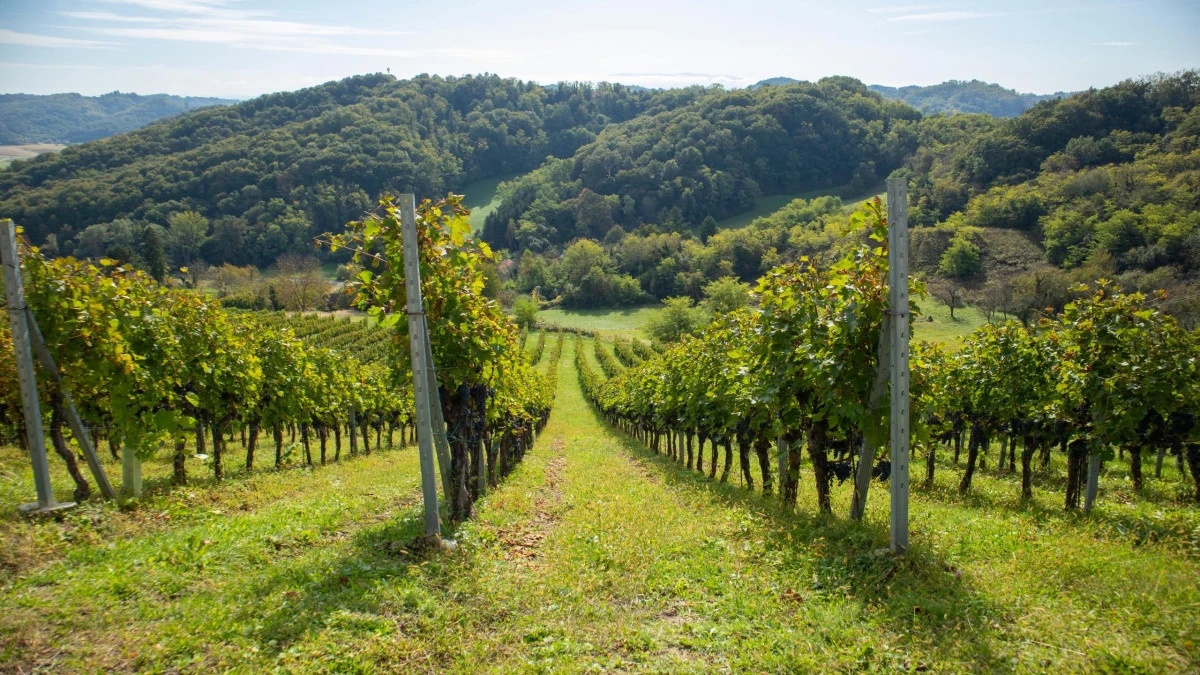
Indigenous grape varieties
Although small compared to wine giants like France, Spain, or Italy, Croatia is remarkably rich in indigenous grape varieties. Nearly 130 native grape cultivars originate from Croatian soil — some of which are the genetic ancestors of world-famous varieties, such as Krapinska Belina, the parent of Chardonnay.
By definition, indigenous grape varieties are those that have been cultivated “since ancient times” in a specific area and are not grown anywhere else. To be officially recognized as indigenous, they must meet four criteria: documented historical evidence, mention in professional literature, confirmed genetic identity through DNA analysis (including proof of parentage), and exclusive cultivation within the given region. Over the past two decades, researchers have rediscovered and preserved about 130 native Croatian grape varieties, with around 42 to 43 now actively cultivated, according to Professor Edi Maletić, one of the country’s leading viticulture experts. Among these are Galac and Ruževina—once nearly forgotten, now reemerging as symbols of Croatia’s wine heritage.
The journey of revival that varieties like Dubrovačka Malvasija and Crljenak Kaštelanski (the original ancestor of the American Zinfandel) have undergone could also await Galac. Croatia’s winemaking tradition stretches back over 2,500 years, and historical records mention as many as 400 local grape varieties, with about 200 once found in Dalmatia alone. Many of these grapes disappeared 150 years ago when European vineyards were devastated by phylloxera and downy mildew. Later, during the socialist period, large cooperatives paid growers by grape weight, so farmers favored high-yielding varieties and abandoned traditional ones like Galac that produced smaller crops. Following the Homeland War, international varieties such as Merlot, Syrah, and Cabernet Sauvignon became fashionable, further pushing native grapes toward extinction.
The remaining 80 to 90 varieties survive only in scattered old vineyards, often in mixed plantings where grapes are harvested together and used to make simple local wines. These are the most endangered, Maletić warns, because when older generations stop tending these vineyards—or pass away—their unique vines often die with them. Once a variety is lost and no living vine remains from which to take grafts, it disappears forever. To prevent this, a field collection in Jazbina, near Zagreb, now serves as a living archive. There, cuttings from 130 old Croatian grape varieties are preserved and studied. Most are described in the Green Book of Croatian Grapes, ensuring that this once-endangered genetic heritage is safeguarded for the future. In essence, the ongoing work has halted the erosion of Croatia’s native grape diversity, securing a priceless link to the country’s ancient winemaking roots.
Below is a journey through some of Croatia’s most beloved and characteristic varieties — both native and historically rooted — that define its wine culture today.
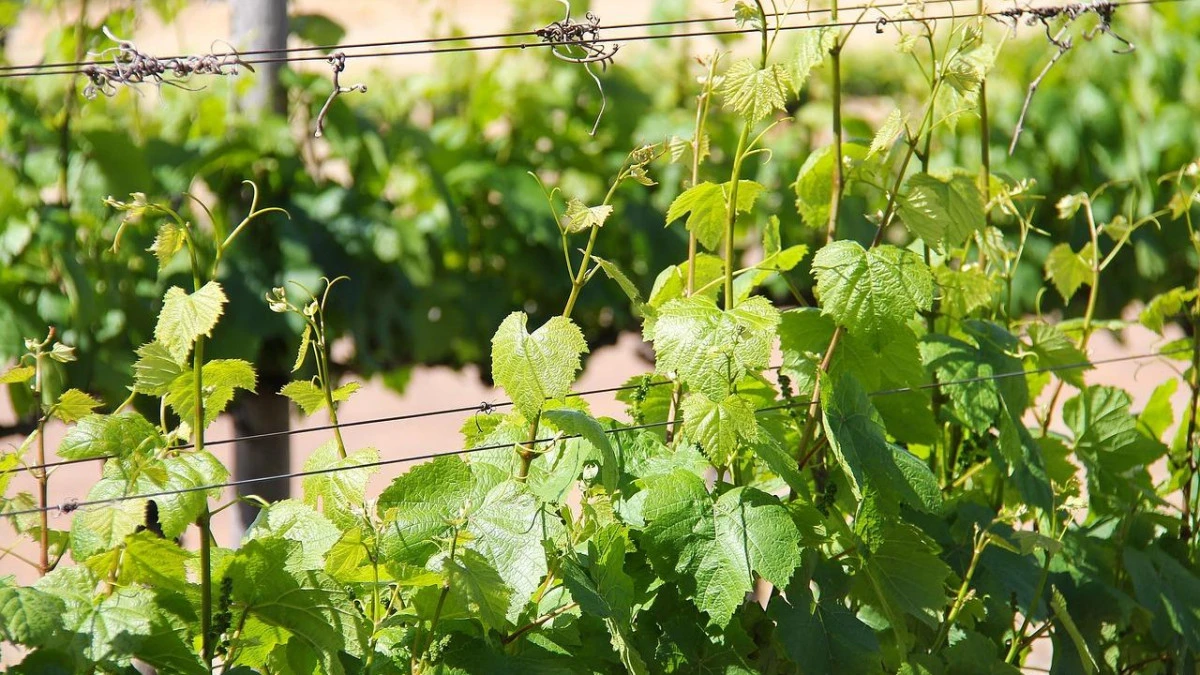
White Grape Varieties of Croatia
Graševina (Welschriesling, Laški Rizling, Olasz Rizling, Riesling Italico)
Although Graševina is grown widely across Central Europe, nowhere does it feel more at home than in Croatia. Its exact origin remains uncertain — some say it came from France, others from Romania, Austria, or Italy. The many linguistic versions of its name (“welsch”, “laški”, “olasz”) all roughly translate to “foreign” or “from Wallachia,” hinting at its Danubian roots.
Whatever its birthplace, Croatia has made Graševina its own. It dominates the vineyards of continental Croatia, particularly Slavonia and the Danube regions, often representing more than half of all plantings. The grape’s resilience, adaptability, and consistent yields have made it a favorite among winemakers.
In the glass, Graševina offers a spectrum of styles — from light and zesty everyday wines to serious, structured bottles capable of aging.
- Kutjevo, in central Slavonia, produces aromatic and lively Graševina with crisp acidity reminiscent of green apples.
- Ilok, on the Danube, gives a fresher, lighter, citrus-driven expression.
- Baranja, with its loess soils and hot summers, delivers full-bodied wines rich in alcohol and ripe fruit flavors.
In cooler years, aromas lean toward apples and citrus; in warmer vintages, tropical and honeyed tones emerge. The hallmark of Graševina is a subtle, slightly bitter finish that adds character and balance. It also shines in late harvest and even ice wines, where its natural acidity supports lush sweetness.
Malvazija Istarska (Malvasia Istriana)
For decades, Malvazija Istarska was believed to belong to the large Mediterranean Malvasia family, yet DNA studies have proven otherwise. This is a true Istrian original, distinct from its Italian and Spanish cousins. Unlike most Malvasias that produce sweet wines, the Istrian version is almost always dry, elegant, and mineral.
The grape thrives across the Istrian peninsula, from the breezy coastal hills of western Istria to the higher inland vineyards near Motovun and Pazin. Its thick skins and steady sugar accumulation result in wines between 11.5% and 13.5% alcohol, typically fresh, balanced, and versatile.
Flavor-wise, expect white peaches, apples, and acacia blossoms, often supported by a delicate salinity that reflects Istria’s limestone soils and maritime influence.
- Coastal Malvazijas are mineral and crisp.
- Central Istrian ones display floral and stone-fruit aromas.
- Southern expressions bring ripe, almost tropical fruit with a hint of banana.
Producers united under the “IQ – Istrian Quality” label to ensure consistent style and authenticity. Many also craft richer, aged versions that can develop beautifully for years, proving that Malvazija Istarska isn’t just Istria’s flagship grape — it’s one of Croatia’s most refined white wines.
Pošip (Pošip Bijeli, Pošipak)
Native to the island of Korčula, Pošip is one of Croatia’s brightest white wine success stories. It is a natural cross between two old local varieties — Bratkovina and Zlatarica — and has since spread to Pelješac, Hvar, Brač, Mljet, and the Dalmatian mainland.
Pošip is naturally high in sugar and extract yet retains remarkable acidity, making it perfect for both fresh and barrel-aged styles.
- The lighter, stainless-steel-fermented version (most common) bursts with aromas of citrus, melon, and wild herbs, with refreshing minerality.
- The oak-aged Pošip, often matured “sur lie,” develops a richer texture, with hints of vanilla, toast, dried fruit, and Mediterranean herbs, and can age gracefully for up to a decade.
Balanced and expressive, Pošip represents the Mediterranean in a bottle — generous, sun-kissed, and full of personality.
Žlahtina
A true native of Krk Island, Žlahtina (“noble one”) is the pride of the Kvarner region. It produces light, crisp wines that perfectly reflect their seaside terroir. Although the variety nearly disappeared after phylloxera, it’s now enjoying a renaissance, with most of its production bottled under the Vrbnička Žlahtina label.
Žlahtina’s wines are delicate, with soft citrus and apple aromas, a touch of meadow herbs, and gentle acidity. Alcohol levels rarely exceed 12.5%, making it ideal as an aperitif or with seafood. While not meant for long aging, good examples can remain fresh for up to three years.
Malvasia Dubrovačka
One of Croatia’s oldest recorded grape varieties, Malvasia Dubrovačka has been cultivated around Dubrovnik and Konavle since at least the 14th century. Part of the wider Mediterranean Malvasia family, it’s known for its role in producing traditional Dalmatian sweet wines (prošek).
Thanks to its loose clusters and thick skins, the grape dries easily, concentrating its sugars and aromas. Sweet versions are luscious and aromatic, with honey, candied orange peel, figs, and walnuts, while dry examples show subtle floral and herbal undertones.
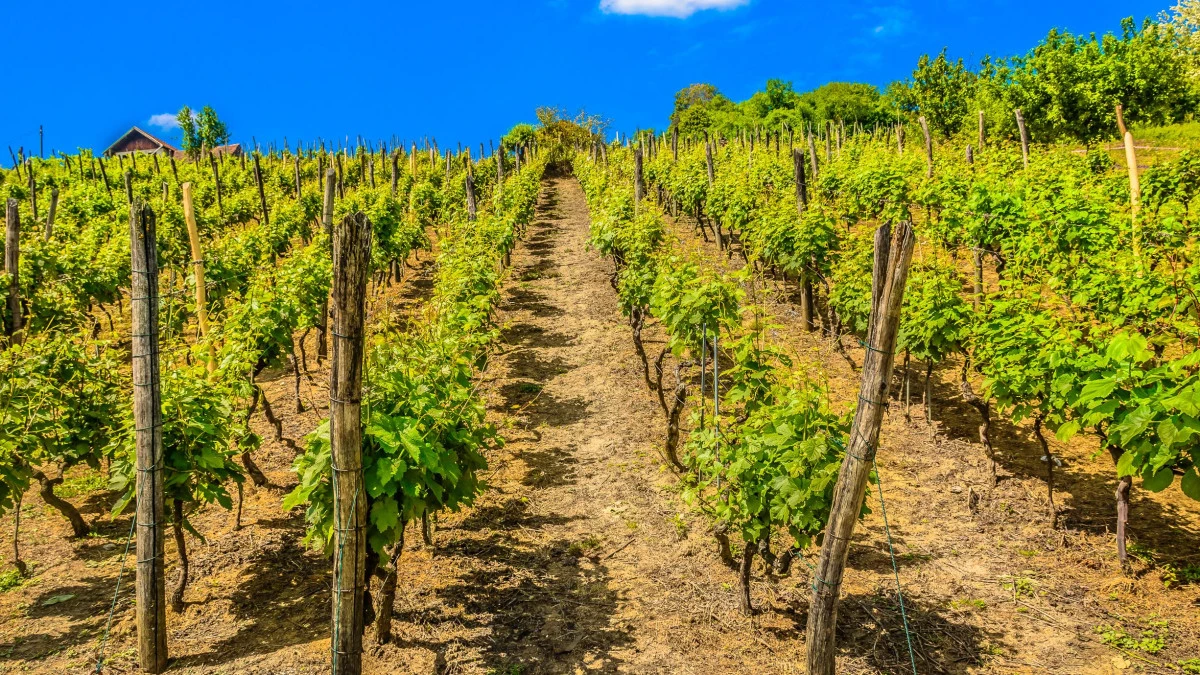
Debit
Once nearly forgotten due to war and neglect, Debit is now making a strong comeback, especially in the hinterland of Šibenik and Skradin. Legend says its name comes from the Latin “debitum” (debt), as farmers once used this wine to pay taxes to local rulers.
Debit produces refreshing, balanced wines with bright acidity and delicate fruitiness — often the only truly crisp white wine style from the Dalmatian interior. Its clean profile, light body, and lemony zest make it ideal for summer drinking and seafood pairings.
Grk
Another treasure of Korčula, Grk is as rare as it is fascinating. It’s one of the few grape varieties with only female flowers, which means it must be planted alongside another variety (typically Plavac Mali) to pollinate. The result is small, uneven clusters that yield intense, concentrated wines.
Dry Grk wines are powerful, mineral, and full-bodied, with a slightly saline edge — a true expression of their sandy island terroir around Lumbarda. Occasionally, Grk is also used for sweet prošek-style wines.
Škrlet
This cheerful, light-bodied variety grows almost exclusively in Moslavina, in central Croatia. It produces youthful, easy-drinking wines with gentle floral and citrus notes, moderate alcohol (around 12%), and lively acidity — ideal for warm summer days.
Once nearly extinct, Škrlet is now being revived by passionate local winemakers. Its charm lies in its freshness and versatility, pairing beautifully with light Mediterranean dishes and seasonal cuisine.
Vugava
Grown almost exclusively on Vis Island, Vugava is one of Dalmatia’s most ancient and storied grapes — possibly dating back to Greek or Roman times. It’s known for producing rich, aromatic wines with naturally high alcohol and ripe tropical aromas.
Traditional versions can be quite bold and honeyed, though modern winemaking has brought fresher, more balanced expressions that highlight its exotic perfume without heaviness.
Kujundžuša
Native to Imotski in the Dalmatian hinterland, Kujundžuša is a local favorite for its easy charm and drinkability. Its name likely comes from the Turkish word for “golden,” describing the grape’s color at ripeness.
Kujundžuša wines are soft, subtle, and lightly fruity, with moderate alcohol and low acidity. They’re not showy, but they embody the relaxed, sunlit spirit of inland Dalmatia — simple, honest, and refreshingly smooth.
Red Grape Varieties of Croatia
Plavac Mali – The King of Croatian Reds
No grape represents Croatian red wine better than Plavac Mali. It is the heart and soul of Dalmatia — bold, sun-kissed, and full of character.
Grown mostly along the steep southern slopes of Pelješac Peninsula, as well as Hvar, Brač, and Vis, Plavac Mali thrives in poor, stony soils that force the vines to struggle and, as a result, produce grapes of exceptional concentration.
Genetic studies have revealed that Plavac Mali is a cross between Crljenak Kaštelanski (Zinfandel/Primitivo) and Dobričić, another native Dalmatian grape. This heritage explains its intensity and robust nature.
Plavac Mali wines are typically deep ruby-colored, powerful, and high in alcohol (13–16%). Their aromas combine ripe dark fruit, dried figs, and cherries with hints of spice, wild herbs, and a touch of gamey earthiness. With oak aging, complex notes of dark chocolate, coffee, vanilla, and pepper emerge, softening the natural tannins.
Top sites such as Dingač, Postup, Trstenik, and Ivan Dolac produce world-class wines that age beautifully. Despite its strength, well-made Plavac Mali remains surprisingly elegant — a true taste of the Dalmatian sun and sea.
Babić – The Stone-Born Red of Primošten
If Plavac Mali is Dalmatia’s king, then Babić is its poet — expressive, soulful, and tied deeply to the rocky coastal terraces around Primošten. These famous vineyards, often called “stone lace,” are built by hand on impossibly steep, sun-scorched slopes overlooking the Adriatic.
Babić grapes prefer poor, limestone soils and low yields, which result in concentrated, deeply colored wines. When young, Babić can show earthy, herbal, and wild berry notes, but when aged in oak it transforms into a wine of depth, warmth, and complexity, revealing layers of blackberry, plum, and Mediterranean spice.
High natural acidity and firm yet ripe tannins give Babić balance and longevity. It’s a variety that speaks of place — rugged, authentic, and unmistakably Dalmatian.
Teran – The Bold Heart of Istria
In Istria, the proud red grape is Teran, long mistaken for Italy’s Refosco but now proven through DNA research to be a distinct, indigenous variety. Historically widespread before the phylloxera outbreak, Teran today is the flagship red of the Istrian peninsula and a vital part of its wine identity.
Teran is naturally high in acidity and rich in color, producing wines with vivid ruby-purple tones and flavors of blackberry, forest herbs, and peppery spice. In the past, it was often made as a light, rustic red, but modern winemakers have refined it dramatically.
When yields are reduced and grapes properly ripened, Teran becomes structured and velvety, showing both freshness and strength. Barrel-aged versions reveal additional layers of dark chocolate, dried fruit, and minerality, giving them impressive aging potential — sometimes well over ten years.
Teran is the perfect companion to Istrian cuisine — think truffles, game, and hearty pastas — and a symbol of the region’s revival in fine winemaking.
Plavina – The Gentle Dalmatian Red
While Plavac Mali and Babić dominate the headlines, Plavina quietly contributes balance and charm to many Dalmatian blends. Found from the Kvarner islands down to southern Dalmatia, it is often used to soften the power of more robust varieties.
Plavina produces medium-bodied wines with mild tannins, moderate alcohol, and fresh red-fruit aromas. Its softness and higher acidity make it approachable and easy to drink, while still carrying the warmth of the Mediterranean.
In recent years, several winemakers have started bottling single-varietal Plavina, proving that this gentle grape can stand proudly on its own. Its supple texture and balance make it a natural partner for everyday Mediterranean fare — grilled vegetables, pasta, and seafood stews.
From the crisp whites of Slavonia to the powerful reds of Dalmatia, Croatia’s wine heritage is a story of resilience and rediscovery. Each variety tells a part of that story — Graševina’s versatility, Malvazija’s elegance, Pošip’s Mediterranean glow, Plavac Mali’s fiery strength.
What unites them all is a shared authenticity — a deep connection between land, tradition, and people. For travelers and wine lovers alike, exploring Croatia’s indigenous grapes is more than tasting wine; it’s experiencing the country’s history, culture, and soul in every glass.
Want to know which Croatian wines to taste and where to find the best winemakers? Check out our blog Guide to Award-Winning Croatian Wines.
Photos: shutterstock, pixabay
