

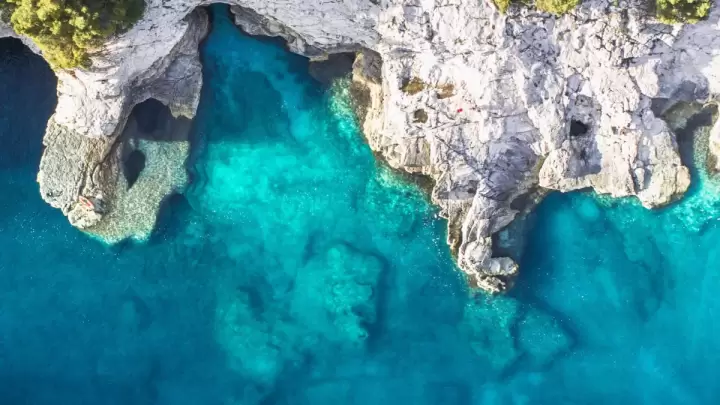
Plan your dream Adriatic voyage with a 7-day yacht itinerary from Dubrovnik to Split.
Croatia’s Adriatic coast is made for exploration. Over a thousand islands, crystal-clear waters, and centuries of heritage make it one of the world’s most desirable luxury yacht charter destinations. This 7-day route from Dubrovnik to Split combines cultural icons, hidden coves, and the best anchorages in Dalmatia — ideal for island hopping in style in 2026.
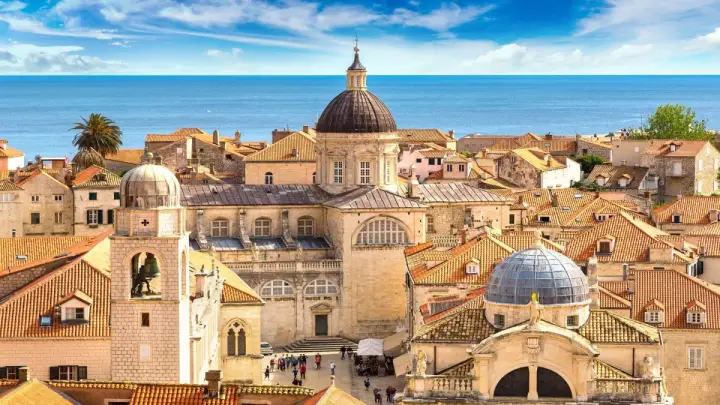
Day 1 – Dubrovnik: The Pearl of the Adriatic
As George Bernard Shaw once said, “Those who seek paradise on Earth should come to Dubrovnik,” while Lord Byron famously described it as “the pearl of the Adriatic.” A UNESCO World Heritage Site, this remarkable city captivates with its timeless beauty and rich history. Its fortified Old Town, with gleaming stone streets and centuries-old architecture, has attracted artists, royals, and celebrities for decades. Just across the shimmering sea lies Lokrum, a verdant, uninhabited island boasting a botanical garden, an ancient Benedictine monastery, and a serene saltwater lake—all nestled within a protected nature reserve and recognized by fans of Game of Thrones. Nearby, the tranquil island of Šipan invites visitors to explore its lush olive groves—so dense they’ve earned a Guinness World Record—and its impressive collection of 43 historic churches, standing as silent witnesses to centuries past. For more insight and travel tips about Dubrovnik, explore our Dubrovnik blog.
Island Highlights
Old Town walls & Stradun promenade
Lokrum Nature Reserve
Šipan’s olive groves and historic churches
Top Anchorages
Šipan Luka Bay – calm overnight shelter
Lopud Bay – ideal for sunset swim stop
Day 2 – Elaphiti Islands (11 NM)
Nestled off the coast of Dubrovnik, the Elaphiti Islands are a captivating archipelago steeped in history, natural splendor, and seafaring tradition. Scattered among hidden reefs and rocky outcrops, the group consists of eight islands and five islets, though only three are inhabited: Koločep, Lopud, and Šipan.
Lopud enchants with its car-free serenity and gentle pace of life. Just a leisurely stroll from the harbor brings you to the famous Bay of Šunj — a spectacular crescent-shaped sandy beach known for its shallow, crystal-clear waters.
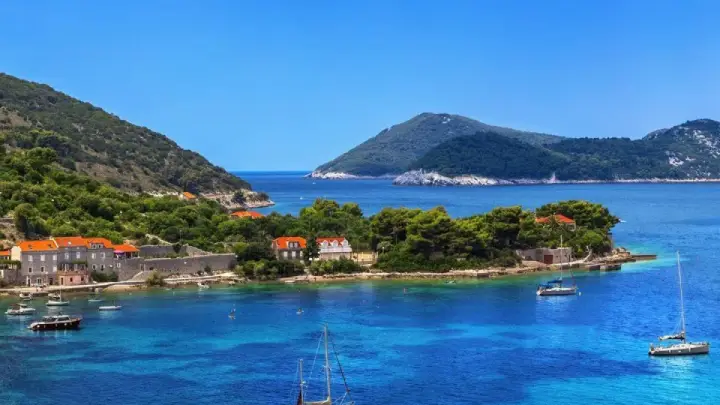
Koločep, though just 2.35 square kilometers in size, surprises visitors with its dramatic contrasts. Thick pine forests embrace the island from east to west, while quiet coves and a mix of sandy and pebbly beaches line its tranquil shores. You can read more about the Elaphiti Islands on our blog and discover their hidden coves, charming villages, and the laid-back rhythm of Adriatic island life.
Šunj Bay – shallow turquoise lagoon
Koločep sea caves and pine coves
Traditional stone architecture on Lopud
Top Anchorages
Šunj Bay – sandy bottom, great holding
Koločep western cove – quiet lunch stop
Day 3 – Mljet: The Green Island (10 NM)
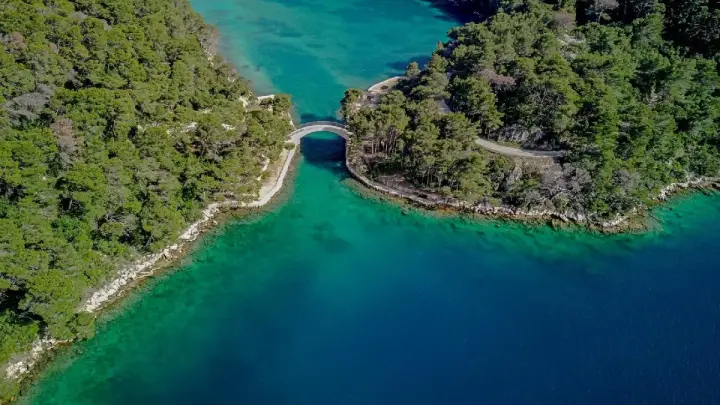
Mljet is the Adriatic’s lushest sanctuary—a vast island cloaked in pine forests, dotted with secluded coves and glimmering saltwater lakes of Large and Small lake. Large lake is actually a sea bay connected to the open sea via a narrow passage near Soline, formed by the flooding of a karst valley. Carved by nature into a labyrinth of serene bays and quiet inlets, it exudes an almost otherworldly beauty. In its still waters, small islets float—one crowned with a 12th-century Benedictine monastery, others left untouched since antiquity. Nearly half of Mljet is preserved as a National Park, where visitors step through the ruins of a Roman fort into a realm of wild, untamed nature. Unlike the more compact Croatian islands, Mljet stretches across 100 square kilometres but is home to just a thousand people. Its southern coast shelters a legendary site—Odysseus’ Cave—where, as myth has it, the ancient hero found safe haven after a shipwreck.
Island Highlights
Mljet National Park – lakes & monastery
Odysseus’ Cave – mythic sea grotto
Roman ruins at Polače
Top Anchorages
Polače Bay – sheltered and scenic
Pomena – near the park entrance
Day 4 – Korčula: Island of Legends (16 NM)
Korčula, a town of rich history and timeless beauty, was once safeguarded by robust walls and towers, strategically built to defend its vital position. Its street layout, designed in a herringbone pattern, ensured both security and comfort for its residents. For centuries, stonecutting and shipbuilding were the island’s most prized crafts.
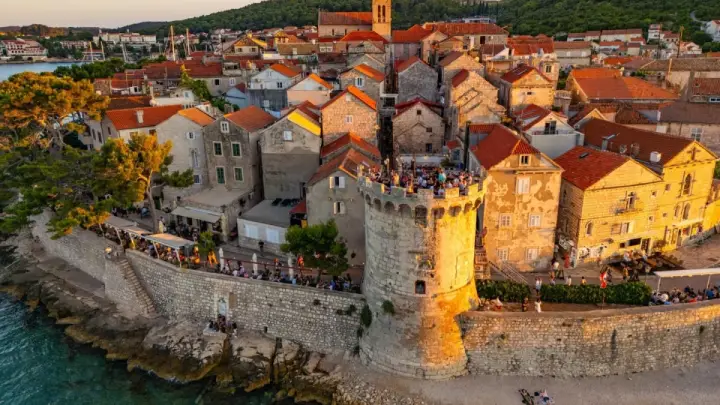
The high-quality stone from local quarries—known as kave—was sought after and exported worldwide. Korčula is also known as the birthplace of Marco Polo, the legendary explorer, who would still recognize his charming medieval hometown today. Just offshore, the small island of Badija invites visitors with its 14th-century monastery, nestled in dense forest and home to a gentle population of wild deer that roam freely. To the northwest lies Proizd, a secluded islet and geological gem, with striking white stone beaches and crystal-clear, turquoise waters that rival those of the tropics. Its untouched nature—with no roads, vehicles, apartments, or villas—offers a true escape. A single beach bar tucked into a quiet cove is the only sign of human presence on this pristine island paradise.
Island Highlights
Marco Polo’s House
Badija Monastery & deer colony
Proizd Island beaches
Top Anchorages
Luka Korčulanska – near Old Town
Proizd Bay – perfect for snorkeling
Day 5 – Vis: Timeless and Untamed (14 NM)
Once a restricted military zone until the late 1980s, Vis has since gained global recognition as the filming location for Mamma Mia 2 and now forms part of the Vis Archipelago UNESCO Global Geopark. Today, Vis is celebrated for its rich blend of history and nature, offering everything from ancient ruins and Tito’s wartime bunkers to fragrant carob trees that dot the landscape.
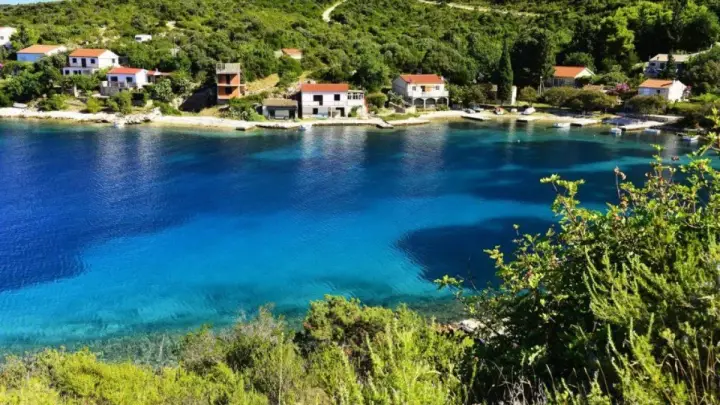
Vis is also home to Issa, the oldest recorded urban settlement in Croatia, founded by the Greeks. The British Royal Navy arrived in the early 1800s, building two forts and even bringing cricket to the island, which was played here as early as 1809, learn more in our blog.
Just off Vis lies Biševo, a tiny island with only 11 residents, a few vineyards, and the famous Blue Cave—a natural wonder that glows with brilliant blue light when the sun hits it just right around midday. Directly across from Bargujac Bay lies Budihovac, an uninhabited islet accessible only by boat. Surrounded by turquoise waters, it offers a peaceful escape and some of the most beautiful, secluded beaches in the area.
Island Highlights
Blue Cave, Biševo
Stiniva Bay
Komiža fishing village
Top Anchorages
Stončica Bay – wide and safe overnight spot
Budihovac Lagoon – pristine turquoise water
Day 6 – Hvar: Glamour and Heritage (12 NM)
Hvar is a sun-drenched blend of history and hedonism, earning its place among the world’s most iconic islands—alongside legends like Bora Bora, Bali, and Capri. Its beauty is undeniable: shaped by Venetian hands, the town gleams with marble-lined streets and medieval elegance.
As the home of Europe’s first public theatre, built in 1612, Hvar’s cultural roots run deep, echoing through its refined squares and storied facades.
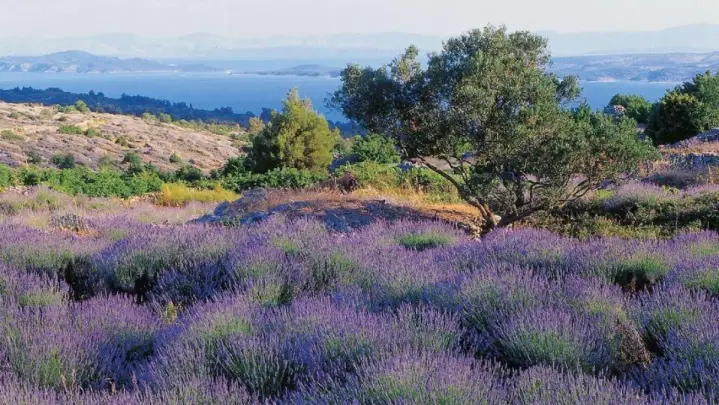
Just beyond the harbor, the Paklinski Islands sprawl like a necklace of 21 jewel-like islets and reefs. Named after paklina—a pine resin once used in shipbuilding—they’re a playground for sailors and sunseekers. Vinogradišće Bay is a standout, with its sandy beach, shallow turquoise waters, and waterfront eateries serving up fresh seafood and local flavors.
A short sail away lies Šćedro, a quiet refuge with more than 20 hidden bays. Protected since 1972, the island has no shops, electricity, or running water—and even in peak summer, no more than 30 people call it home. Untouched and timeles.
Island Highlights
Pakleni Islands & Vinogradišće Bay
Hvar Old Town & historic theatre
Šćedro’s untouched bays
Top Anchorages
Palmizana Marina – stylish dining & nightlife
Mostir Bay, Šćedro – calm overnight spot
Day 7 – Brač & Split: The Grand Finale (15 + 17 NM)
The largest of Dalmatia’s islands, Brač is best known for Zlatni Rat, its glorious ‘Golden Cape’. Croatia’s most famous beach is a triangular 500-meter peninsula that juts out from the pine-clad coast — its beauty is best admired from the air. What makes it even more fascinating is that it often changes shape due to shifting winds and sea currents.
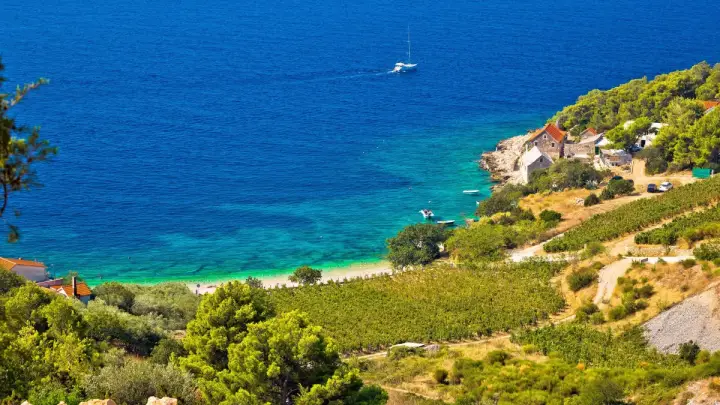
Rising to 780 metres, Vidova Gora is the highest peak on all Croatian islands, offering breathtaking panoramic views. Not far from it lies the magical Blaca Hermitage, a centuries-old monastery carved into a cliffside, steeped in mystery and history.
Unique and specific in its beauty, the island of Brač hides within its heart a fantastic stone. Discover the only stonemasonry school in Croatia, where this snow-white stone is still carefully crafted by hand. From the Hungarian Parliament in Budapest to the Reichstag in Berlin, the Governor’s Palace in Trieste, and even the White House in Washington, D.C., this remarkable stone has left its mark on some of the world’s most iconic buildings.
Island Highlights
Zlatni Rat Beach & Vidova Gora
Blaca Hermitage monastery
Top Anchorages
Milna, Brač – charming harbor marina
When Roman Emperor Diocletian chose a place to build his retirement palace, he picked Dalmatia’s sunniest and most sheltered bay. That white marble mansion now forms the historic heart of modern-day Split. The city has grown out of its Roman roots — quite literally — as over 100 restaurant terraces spill out from ancient walls, making Croatia’s second-largest city feel like one giant open-air café.
Among the remarkable relics tucked within the old town is a genuine Egyptian sphinx, brought here on Diocletian’s orders — it’s considered one of the oldest objects in Split, dating back over 3,000 years. The city is full of stories: did you know Split was sold to Venice in 1409 for just 100,000 ducats? Or that it’s home to one of Europe’s oldest Jewish cemeteries?
Athletic spirit runs deep here too — from 1952 to 2012, an incredible 94 Olympic medalists came from Split, earning it the nickname "City of Champions." The city’s architectural gems include the Vestibule, a stunning structure often called the twin of Rome’s Pantheon.
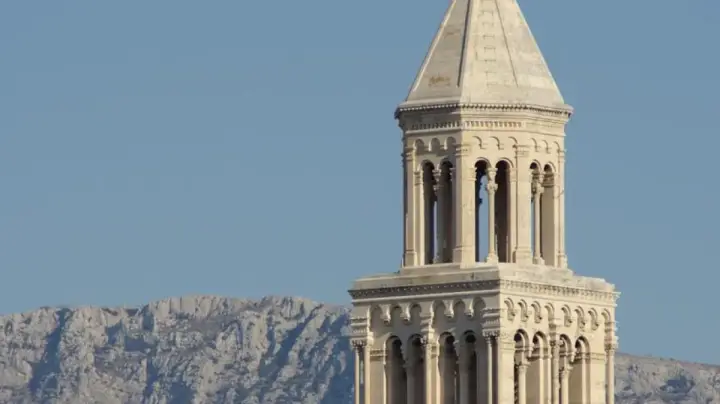
Even great minds found inspiration here: Sigmund Freud spent his holidays in Split in 1898, perhaps drawn by the sea, the sun, and the layers of history that define this timeless coastal city.
Island Highlights
- Diocletian’s Palace
Top Anchorages
- Split City Port – lively waterfront berth
Onboard Experience: Crew & Luxury Living
A luxury yacht charter in Croatia is defined by service and comfort.
Your captain navigates through scenic routes and secluded bays, your chef prepares gourmet Adriatic cuisine, and the stewardess team ensures effortless hospitality.
Enjoy water toys like Seabobs, SUP boards, and jet skis, or relax in the jacuzzi under the stars. Every detail is tailored to your preferences — from morning espresso on deck to sunset champagne at anchor.
Highlights of Life on Board
Tailored itinerary planning
Fine dining with local ingredients
Five-star crew service and privacy
Water sports and beach club access
Why Charter a Yacht in Croatia in 2026
With world-class marinas, crystal waters, and more than a thousand islands, Croatia remains Europe’s top yacht charter destination.
From Dubrovnik’s heritage to Hvar’s nightlife and Vis’s wild bays, every day offers a new discovery — all from the comfort of your private yacht.
Photo: shutterstock
