

The cuisine of the Croatian coast is known for its irresistible yet healthy Mediterranean way of eating — featuring generous amounts of olive oil, wine, garlic, and, of course, fresh seafood.
At local markets, it’s almost always possible to find high-quality, freshly caught fish, and Croatians typically enjoy it at least once a week.
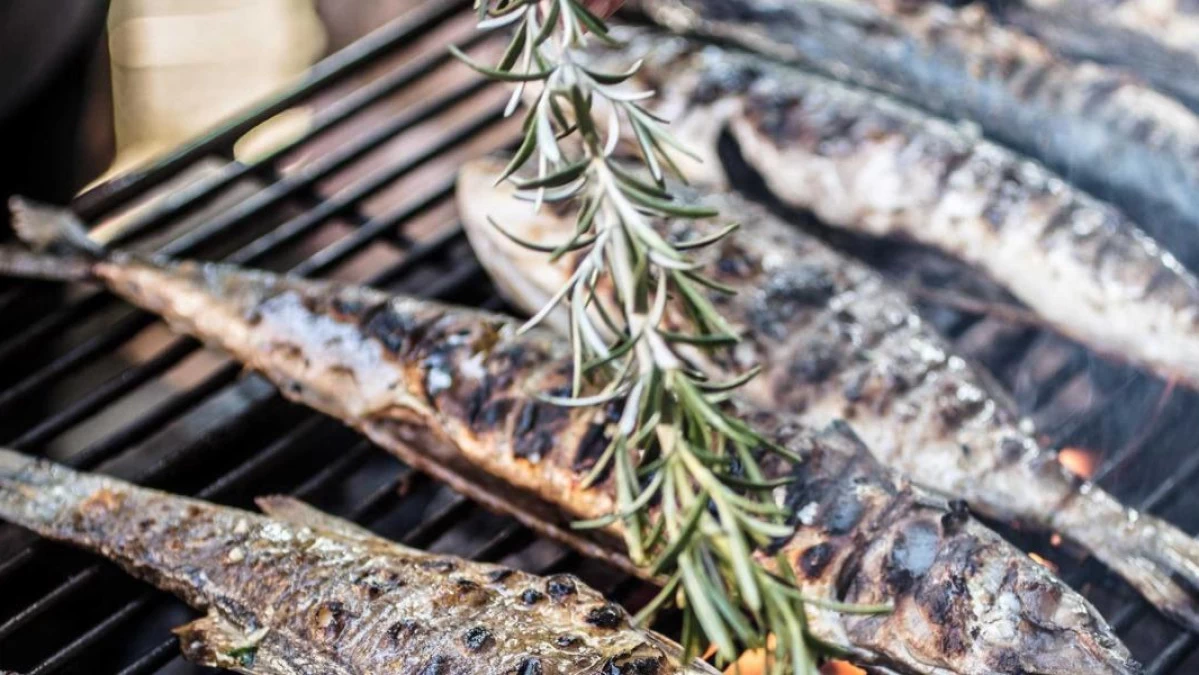
The simplicity of Dalmatian life is perfectly reflected in its cooking style — fish is usually grilled (na gradele) or boiled (na lešo), with minimal seasoning so that its natural flavour remains pure and distinct.
Recipes for preparing fish in Dalmatia are often passed down through generations, and it’s almost always served with a glass of good local wine.
Croatia is also rich in freshwater fish, which is especially popular in the inland regions, prepared differently but equally considered a delicacy.
However, since our site focuses on charter experiences and the sea, we’ll mainly talk about saltwater fish — but if you ever get the chance, don’t miss trying some of our delicious freshwater specialties as well!
Table of Contents
Sea Fish – The Treasures of the Adriatic
Adriatic fish are an inseparable part of Dalmatian culinary tradition, cherished both by locals and visitors alike.
Fish dishes are among the highlights of every coastal tavern and restaurant, especially during the summer season.
Lightly seasoned with olive oil, sea salt, and fresh herbs, these simple dishes are loved by all generations.
Below, discover the most beloved species of Adriatic fish — and the ones you shouldn’t leave Croatia without trying.
These fish live near the seabed and are caught using traditional fishing tools such as longlines, fish traps, or stationary nets.
Their value lies not only in centuries of fishing tradition but also in the fact that they are among the most flavourful fish in the Adriatic and the Mediterranean.
In short, oborita riba — or “bottom fish” — has always been a symbol of quality: its meat is firm, juicy, and highly prized in coastal cuisine.
What Does “Oborita Riba” Mean?
The name comes from their way of life — these fish “settle down” (oboriti se) near the sea bottom, hiding among rocks, sand, or seagrass.
They have strong, compact bodies adapted to living in the quiet corners of the sea.
Unlike blue fish that swim in open waters, oborita riba moves more slowly, resulting in a more intense flavour and firmer texture.
Most Famous Types of “Oborita Riba”
In the Adriatic, the most common bottom fish include:
Brancin / Sea Bass (Dicentrarchus labrax) – the star of every fish menu. Whether grilled, baked, or boiled, it’s always a winner.
Orada / Gilt-Head Bream (Sparus aurata) – recognizable by the golden line between its eyes; its white meat is among the most highly valued.
Zubatac / Common Dentex (Dentex dentex) – a strong predator and a true reward for fishermen. Rare at markets but a delicacy on any table.
Arbun / Red Seabream (Pagellus erythrinus) – smaller, reddish, and incredibly tasty. Often fried or baked whole.
Škarpina / Red Scorpionfish (Scorpaena scrofa) – intimidating to look at, but the queen of fish soups and stews, with tender, aromatic meat.
Kantar and Kavala – lesser-known but beloved among connoisseurs. Usually grilled or added to fish stews.
Other notable species include Fratar, Šarag, Pagar, and Kirnja – all prized for their taste and texture.
Why Is Bottom Fish So Highly Valued?
Above all — because of the flavour.
The meat is firm, low in fat, and perfectly suited for all types of preparation — from simple grilling over charcoal to complex stews and fish soups.
In addition, oborita riba is not caught in large quantities like blue fish, making it rarer and therefore more exclusive.
This raises both its price and its prestige.
On the Plate – Simplicity Is the Key
Although every chef has their own secret, the best way to prepare bottom fish is usually the simplest:
a drizzle of olive oil, a sprig of rosemary, sea salt, and a hot grill over charcoal.
This brings out the purest taste of the sea.
In Dalmatia and Istria, you’ll also find it served lešo (boiled) with Swiss chard and potatoes, or in rich fish soups and broths that capture the essence of the Mediterranean.
More Than Just Food
Bottom fish is not only a gastronomic delicacy, but also a symbol of the Mediterranean lifestyle.
Once you taste it, it’s clear why locals speak of it with such affection.
Whether you choose brancin, orada, or škarpina, what ends up on your plate is nothing less than a piece of the Adriatic — in its most delicious form.
Freshwater Fish
The inland regions of Croatia are also known for their exceptional fish specialities — freshwater fish are almost a culinary trademark of Slavonia, Podravina, and Posavina, with šaran (carp), pastrva (trout), and štuka (pike) among the most popular and delicious varieties.
Šaran / Carp
Famous for its juicy and flavourful meat, carp can be prepared in many ways and is an essential ingredient in the traditional fiš-paprikaš, a spicy fish stew typical of eastern Croatia.
Its meat is rich in protein and omega-3 fatty acids, offering numerous health benefits.
If you’re not a fan of soup-based fish dishes, simply season carp with garlic, paprika, and lemon juice, bake it in the oven, and enjoy its rich, distinctive taste!
Pastrva / Trout
Trout is the most famous freshwater fish in Croatia.
It thrives both in fast-flowing rivers and calm lakes and is prized for its delicate texture and slightly nutty flavour.
It is most commonly grilled or baked and seasoned with fresh herbs such as parsley and dill, creating a light yet flavourful meal.
Štuka / Pike
Pike is a lean freshwater fish known for its firm meat and unique taste.
Low in calories but rich in protein, it’s an excellent choice for healthy meals.
It is traditionally prepared in paprikaš or fish soups and remains an important part of the culinary heritage of continental Croatia.
Since our portal focuses primarily on charter experiences and the sea, we’ll continue with the Adriatic saltwater fish—but if you ever get the chance, don’t miss the opportunity to taste Croatia’s freshwater delicacies as well.
Adriatic Fish You Must Try
Below you’ll find the most iconic and beloved fish of the Adriatic Sea — from elegant white-fleshed delicacies to everyday coastal staples that define the Mediterranean table.
Each species tells its own story of flavour, tradition, and life beneath the waves.
Kovač / Šanpjer / John Dory (Zeus faber)
Known also as St. Peter’s fish, the kovač carries a story as legendary as its taste.
According to tradition, the dark spot on its side marks the place where Saint Peter’s thumb and finger once held it.

With its flat, oval body and delicate white meat, the John Dory is one of the finest and most sought-after fish in the Adriatic.
Its texture is silky and tender, while the flavour is subtle yet distinct — a perfect choice for refined palates.
Best enjoyed grilled, baked, or lightly pan-fried, this fish requires only a touch of olive oil, lemon, and sea salt to shine.
Škarpina / Red Scorpionfish (Scorpaena scrofa)
Impressive in its red and orange hues and slightly fearsome in appearance, the škarpina is the undisputed queen of fish soups and brudet.
Though covered in venomous spines — which are carefully removed before cooking — her delicate, juicy flesh rewards the effort with a flavour that delights even the most demanding gourmets.

Škarpina’s aromatic and tender meat makes it perfect for soups, stews, or roasting in the oven.
Its depth of flavour adds richness to every dish — a true culinary gem of the Adriatic.
Zubatac / Common Dentex (Dentex dentex)
The zubatac is one of the Adriatic’s most prestigious and highly prized fish.
Recognizable by its powerful jaw and firm body, this predator is a favourite among professional chefs and fishermen alike.

Its firm, aromatic flesh makes it ideal for grilling on charcoal, where just a drizzle of olive oil and a sprig of rosemary bring out its naturally rich flavour.
Because it’s not easily caught and appears rarely in markets, enjoying zubatac is always a special culinary experience.
Tuna / Bluefin Tuna (Thunnus thynnus)
The tuna — or more precisely, the bluefin tuna — is the king of the open Adriatic Sea.
A fast and powerful swimmer, it can reach several hundred kilograms in weight and is highly prized both locally and internationally.
In the Croatian Adriatic, bluefin tuna is also farmed and exported to Japan, where it is valued as a premium delicacy.
In domestic cuisine, tuna is commonly grilled, prepared tataki-style (lightly seared on the outside), or served as carpaccio — thin, raw slices drizzled with olive oil and lemon.

Its dense, meaty texture and rich flavour resemble a cross between pork and game, while its high omega-3 content makes it a healthy, satisfying choice.
Few fish combine power and flavour as gracefully as the Adriatic tuna.
Trlja Kamenjarka / Striped Red Mullet (Mullus surmuletus)
The trlja, or rock mullet, is one of the Adriatic’s most charming and colourful fish.
Recognizable by her reddish stripes and delicate, aromatic flesh that separates easily from the bone, trlja is considered a true Mediterranean delicacy.
It is most often fried, grilled, or baked, and pairs beautifully with white wine, rosemary, and olive oil.
Despite her modest size, trlja offers an exceptional depth of flavour, bringing the full character of the sea to every bite.
Orada / Komarča / Gilt-Head Bream (Sparus aurata)
The orada, also known as the gilt-head bream, wears a golden stripe between its eyes, earning her the title of “queen of the sea.”
Her white, juicy meat is one of the most prized in Mediterranean cuisine and often plays a starring role in traditional dishes like brudet.
Simple grilling or baking with olive oil, sea salt, and lemon is all that’s needed to highlight this noble fish’s natural sweetness.
Brancin / Lubin / European Seabass (Dicentrarchus labrax)
A swift and elegant swimmer, brancin is a symbol of Dalmatian coastal cuisine.
Known for his delicate white flesh and subtle marine aroma, he’s one of the Adriatic’s most beloved fish.
Brancin can be grilled, baked, or boiled (na lešo), and is often served with Swiss chard and potatoes — a timeless Dalmatian pairing.
Its mild yet distinctive flavour and versatility make it a favourite among chefs and families alike.
Raža / Ray (Rajiformes)
The raža, with her flat body and wing-like fins, glides gracefully along the seabed — a fascinating sight beneath the waves.
Her white, tender meat has a delicate flavour and light texture, making it a favourite for simple Mediterranean preparations.
In Dalmatia, raža is often boiled (na lešo) with potatoes and olive oil, or grilled with lemon and capers.
Recently, this species has been making a comeback on restaurant menus thanks to its nutritional value and easily digestible, lean meat.
Grdobina / Anglerfish (Lophius piscatorius)
She may not be the prettiest inhabitant of the sea, but grdobina is undoubtedly a gastronomic star!
Her firm, lean, boneless meat is ideal even for children’s meals and perfect for soups, stews, and grilling.
Caught using traditional fishing tools such as parangals and gillnets, grdobina is considered one of the most delicious bottom-dwelling fish of the Adriatic — prized both by chefs and fishermen.
Kirnja / Dusky Grouper (Epinephelus marginatus)
Majestic and powerful, kirnja is one of the most prized predators of the Adriatic Sea.
It inhabits rocky seabeds and caves, where it patiently waits for its prey.
Its dense, juicy meat and rich flavour make it a true Mediterranean delicacy.
Kirnja is often grilled, baked, or used in traditional brudet, where its flavour adds incredible depth to the dish.
List Nošan / Common Sole (Solea solea)
The list nošan is a flatfish that lives on sandy seabeds along the Adriatic coast.
Easily recognized by its oval, flat body and ability to blend perfectly with the ocean floor, it has delicate, white, mildly sweet meat — ideal for light, refined dishes.
Most often pan-fried, grilled, or baked with olive oil, lemon, and fresh herbs, list nošan is a favourite among those who appreciate gentle, elegant flavours.
Šarag / White Seabream (Diplodus sargus)
One of the most traditional and beloved fish of the Adriatic, šarag lives near rocky coasts and is highly valued for its firm, flavorful meat.
Best enjoyed grilled over charcoal, seasoned simply with olive oil, sea salt, and rosemary, it can also be baked or cooked lešo with vegetables.
Its balanced flavour and tender texture make it a true representative of authentic Mediterranean cuisine.
Arbun / Red Seabream (Pagellus erythrinus)
Arbun — small, vibrant, and irresistibly tasty — is recognized by its reddish-pink colour and large eyes.
Living near the seabed, it is highly valued for its tender, mildly sweet white flesh.
Most commonly grilled whole, fried, or baked with potatoes and olive oil, it’s a staple of Dalmatian home cooking.
Despite its modest size, arbun is considered a true delicacy, often compared to larger and more expensive fish for its refined flavour.
Gof / Felun / Greater Amberjack (Seriola dumerili)
Locally known as gof, this powerful predator is one of the most prized fish of the Adriatic Sea.
Younger specimens are called felun or žutej, names derived from their yellowish colour, which fades as they mature into a silvery-blue hue.
Highly valued in cuisine, gof has firm, low-fat, protein-rich meat, considered among the finest in the Adriatic.
The most tender and flavorful part is located just behind the head, above the belly — perfect grilled or baked to showcase its natural richness.
Palamida / Bonito (Sarda sarda)
A fast and strong pelagic fish, palamida is closely related to tuna and mackerel.
It lives in open waters but often approaches the coast in warmer months, making it a favourite catch among local fishermen.
Its dark, firm meat is rich in omega-3 fatty acids, protein, and minerals, with a taste slightly milder than tuna but equally satisfying.
In Dalmatian cuisine, it is most often grilled or baked, served warm or cold with olive oil, garlic, and capers.
Everyday Classics – Simple and Authentic Adriatic Flavours
Srdela / Sardine (Sardina pilchardus)
The sardine, or srdela, is one of the true symbols of the Adriatic Sea and a cornerstone of the Mediterranean diet.
Small, affordable, and packed with nutrients, sardines are rich in omega-3 fatty acids, calcium, and vitamin D, making them both delicious and exceptionally healthy.
They can be prepared in countless ways — grilled, fried, baked, or marinated in olive oil and vinegar.
Simple yet full of flavour, freshly caught sardines grilled over charcoal with sea salt and lemon are a quintessential Dalmatian experience.
Beloved by locals and visitors alike, srdela embodies the spirit of coastal life — humble, healthy, and irresistibly tasty.
Inćun / Anchovy (Engraulis encrasicolus)
The anchovy, or inćun, is small but mighty — a staple of Adriatic and Mediterranean cuisine.
Despite its size, it bursts with intense, salty, and aromatic flavour, making it a favourite ingredient in many coastal dishes.
Fresh anchovies are often grilled, fried, or marinated in olive oil, vinegar, and garlic, while salted inćuni are a traditional delicacy, used to enrich sauces, salads, and pizzas.
Rich in omega-3 fatty acids, inćun perfectly capture the essence of the sea — simple, wholesome, and deeply Mediterranean.
Papalina / Sprat (Sprattus sprattus)
The papalina, or sprat, is a small, silver-blue fish often compared to sardines but with an even milder and more delicate flavour.
Common in the northern Adriatic, especially around Istria and the Kvarner Gulf, papalina is cherished for its simplicity, affordability, and nutritional value.
It is most commonly fried until crispy, lightly floured and served with lemon and a glass of white wine — a true taste of the Adriatic coast.
Rich in omega-3 fatty acids and proteins, papalina is both healthy and delicious, a humble yet essential part of everyday coastal cuisine.
Girica / Silverside (Atherina boyeri)
The girica, or Mediterranean silverside, is a low-fat, low-calorie fish rich in vitamin B12, selenium, and omega-3 fatty acids.
Fresh girica have a silvery-green colour and a delicate aroma reminiscent of cucumber or watermelon — a sign of true freshness.
They are most often fried whole, but can also be baked or pickled. The bones are small and soft, so they can be eaten when cooked, along with the thin, tender skin.
Larger specimens have meat that easily flakes off the bone, while smaller ones are typically eaten whole.
Because of its mild flavour and crisp texture, girica is a beloved snack or starter along the Adriatic coast — simple, healthy, and irresistibly Mediterranean.
Oslić / Hake (Merluccius merluccius)
The oslić, or hake, is a white fish that too often remains in the shadow of more glamorous Adriatic species like seabass and gilt-head bream.
Yet oslić has plenty to offer — mild, tender, and flaky meat that’s versatile and easy to prepare.
It can be cooked in many ways — in soups, stews (brudet), or baked in the oven.
Whether pan-fried, breaded and fried, or baked with potatoes and olive oil, oslić is always a delicious and satisfying option.
Perfect for both everyday meals and refined dishes, it proves that even the most modest fish can deliver the full taste of the sea.
Skuša / Mackerel (Scomber scombrus)
The skuša, or mackerel, is a blue (oily) fish recognized by its silver body with dark stripes along the back.
It’s one of the healthiest fish in the Adriatic, packed with omega-3 fatty acids, protein, vitamins D and B12, and minerals.
Its tender, flavorful meat has a rich, slightly oily texture. Because it spoils quickly, it’s often smoked, marinated, or served fresh — most commonly grilled or baked.
Nutritious and full of character, skuša is a Mediterranean classic, balancing flavour, health benefits, and simplicity in every bite.
Lokarda / Atlantic Chub Mackerel (Scomber colias)
The lokarda is a close relative of the common mackerel (skuša), but with a rounder body and more pronounced dark stripes on its back.
A blue fish rich in omega-3s and protein, it’s a fantastic choice for a healthy Mediterranean diet.
Its meat is flavourful and slightly oily, perfect for grilling, baking, or marinating, and it’s often used in traditional Dalmatian recipes.
Fresh lokarda is tender and juicy, while smoked or pickled lokarda has a bold, savoury taste.
Nutritious, affordable, and full of authentic sea flavour, it represents true coastal simplicity.
Ovčica / Saddled Seabream (Oblada melanura)
The ovčica, or saddled seabream, is a common Adriatic fish recognized by its silver body and the black spot near its tail.
It often swims in schools near rocky shores and seagrass beds, making it a frequent catch for local fishermen.
Its tender, mildly sweet white meat has a pleasant marine aroma. Ovčica is best grilled, baked, or pan-fried, and pairs beautifully with olive oil, garlic, and herbs.
Although not as prestigious as larger species like seabass or dentex, ovčica is loved for its balanced flavour and soft texture, a staple of everyday Dalmatian home cooking.
Other Adriatic Favourites for Brudet
We can’t forget the lesser-known but equally delicious Adriatic fish —
kokot (gurnard), pauk (weeverfish), ugor (conger eel), kanjac (wrasse), pišmolj (goby), cipli (grey mullet), fratar (sea bream), pagar (red porgy), and tabinja (comber).
These species might not always take the spotlight, but they make excellent choices for traditional Dalmatian brudet — the famous fish stew of the coast.
In a true fisherman’s dish, you’ll often find them alongside škarpina (scorpionfish), grdobina (anglerfish), and raža (ray) — all contributing to the deep, rich flavours that define authentic Adriatic cuisine.
Whether you’re sailing from Split, Hvar, or Dubrovnik, these fish are staples of the Croatian coast. Each bite tells the story of the Adriatic — pure, simple, and full of life.
Dobar Tek!
Enjoy your meal!
If you’re wondering which wine to pair with your dish, check out our wine guide: Guide to Award-Winning Croatian Wines
Photo: HTZ, Centaurus
