

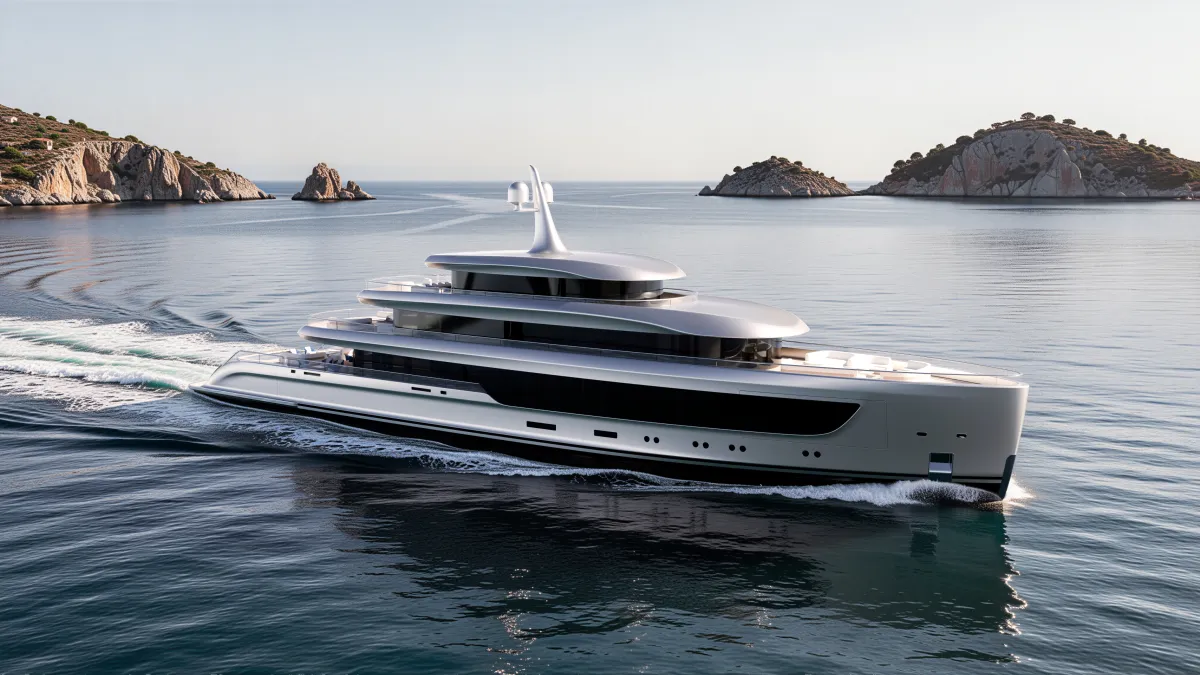
A new 60-metre motor yacht concept from Wānaka, New Zealand, is bringing an automotive mindset to the world of superyacht design. Named Karros, the project draws its identity from the ancient Gaulish word for “wheeled vehicle,” a fitting reference for a yacht shaped by the principles of car design rather than traditional naval styling.
Instead of focusing purely on technical data or performance figures, Karros has been imagined as an object of desire — a yacht meant to stir emotion in much the same way as a high-end sports car. Its design centres on proportion, surface treatment and the interplay of light, all elements more commonly associated with luxury automotive design studios than with conventional yacht development.
What defines the exterior is its sculptural treatment. The concept uses taut, carefully controlled lines to create depth and contrast across the superstructure, allowing light to travel across the surfaces before falling sharply into shadow. One of the most distinctive features is the pronounced line wrapping around the forward section of the superstructure, adding shape and drama to an area that is often handled in a far more restrained way on most yachts.
This same design discipline continues along the hull, where the challenge was to introduce visual character without compromising the interior. Rather than cutting deeply into the hullside to frame the widebody windows — a move that would have eaten into guest space — the designers developed a solution that pulls the hull surface inward below the main deck. This creates a crisp shadow effect and a strong highlight line, giving the profile greater energy while preserving the full beam for the guest accommodation.
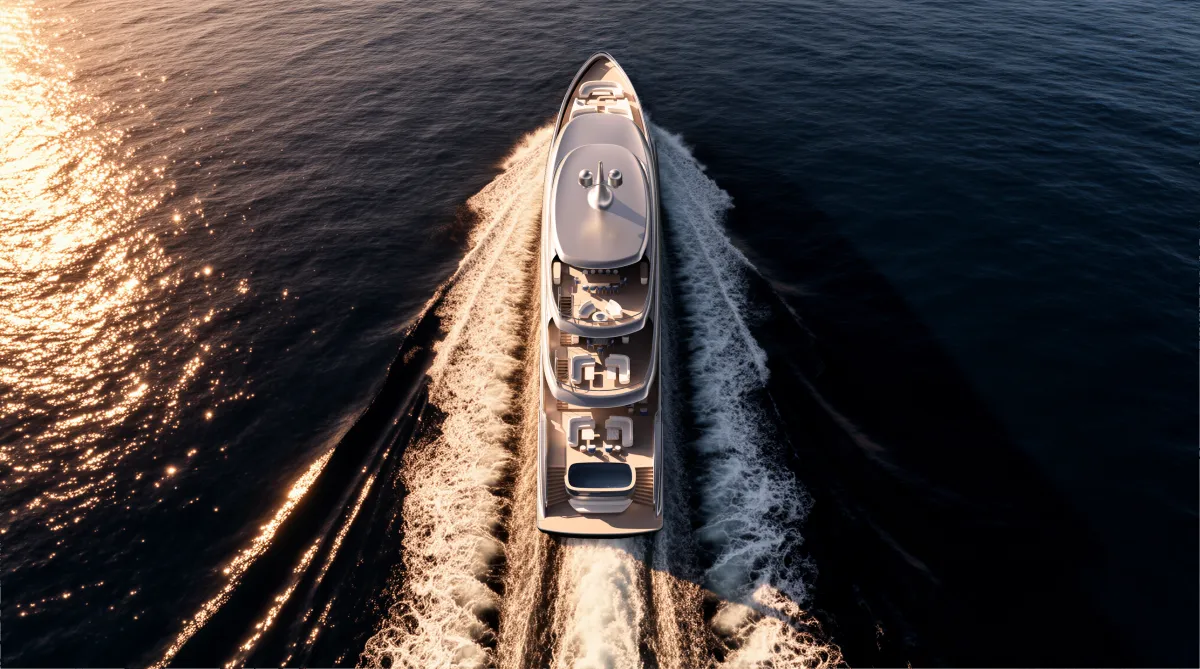
That decision also improves the onboard experience in a very practical way. Because the windows can extend lower, closer to deck level, the suites benefit from more daylight and broader sea views. The result is an interior that feels more open and connected to the surroundings.
Karros has been designed to host 12 guests in six cabins. Four guest suites and a VIP cabin are positioned on the main deck, where they make the most of the large windows and generous beam. The owner’s suite sits on its own dedicated level above, offering sweeping views forward as well as a more private residential feel. The arrangement includes twin mirrored bathrooms and dressing rooms, a private office, a lounge area, and direct access to a forward terrace.
At the stern, the yacht is arranged around leisure and relaxation. The aft main deck, swim platform and beach club are conceived as one continuous social zone, with a glass pool acting as the focal point. The layout has been planned to ensure easy movement between these spaces, especially when the beach club doors are opened to create a direct connection with the water.
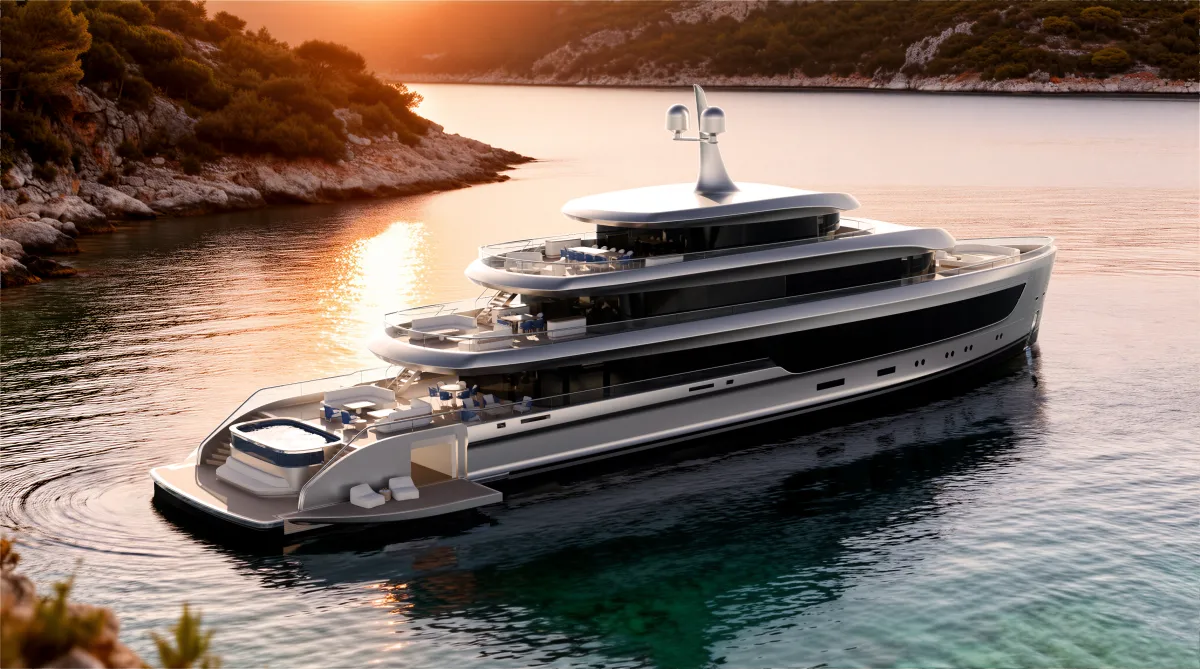
To keep this area free for entertaining, the yacht’s tenders and water toys are stored forward. The proposed setup includes a 7.5-metre guest tender, a 6.2-metre crew tender, personal watercraft and other equipment, all positioned away from the stern so the beach club atmosphere remains uninterrupted.
The bridge deck continues the emphasis on comfort and social use, with an outdoor dining area and firepit integrated alongside the bridge and the captain’s cabin. Behind the scenes, practical details for crew operations have been woven discreetly into the design. Service areas, pantries, a food lift and separate circulation routes are all intended to support smooth onboard operations without intruding on guest privacy.
According to the concept’s underlying brief, the goal was clear: create a yacht with generous accommodation, a carefully considered layout and efficient use of every part of the vessel. The real challenge, however, was to achieve all of this while still producing something visually striking.
That balancing act is what gives Karros its identity. Rather than treating styling, interior planning and onboard living as separate tasks, the concept approaches them as parts of the same design problem. The result is a yacht proposal that feels less like a conventional superyacht exercise and more like a design object shaped by emotion, precision and everyday usability.
Photo: Isaac Burrough Design
