

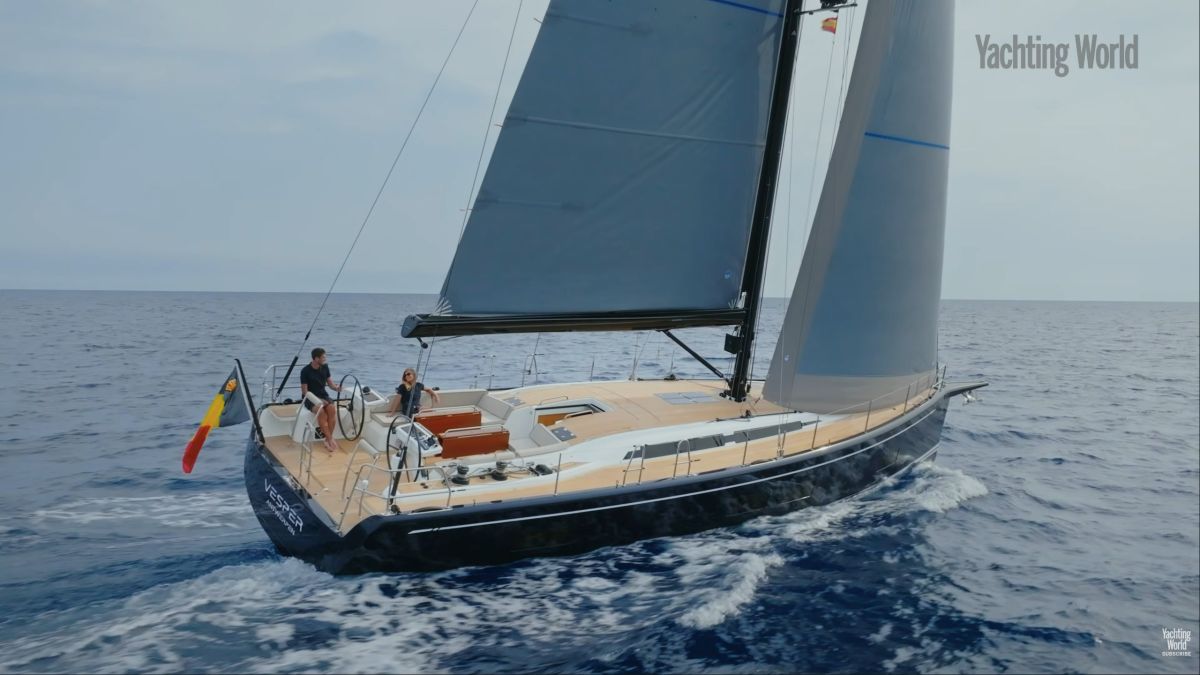
The sailing world recently turned its eyes toward Saint-Tropez for the first official sea trials of the Swan 51, a yacht Nautor Swan describes as a "sportscar" for the water. This new model, designed by the legendary German Frers, represents a significant evolution in the cruising range, successfully bridging the gap between performance and comfort. This report draws on detailed insights from Yachting World’s first-hand testing, where Toby Hodges put the vessel through its paces in the Mediterranean.
A Modern Successor with Frers Heritage
The Swan 51 is a pivotal model for Nautor Swan, replacing the popular Swan 48 and serving as the brand's new entry-level cruising yacht. The relationship between Nautor and German Frers actually began with a 51-foot model, making this release a return to the brand's core heritage. Compared to its predecessor, the 51 offers extra beam and volume, which translates into a sail locker that is 80% larger and fuel tanks that have been increased by 130% to 650 liters, significantly enhancing self-sufficiency at anchor.
Performance and Handling in Light Air
During the trials in Saint-Tropez, the Swan 51 proved its "sportscar" moniker by showing exceptional performance even in light Mediterranean breezes,. The yacht was able to match or nearly match true wind speeds using its A2 spinnaker; for instance, it recorded 6.7 knots of speed in just 6 knots of true wind,.
The steering is described as very direct and reactive thanks to a twin rudder setup. Constructed from vinyl glass fiber with a solid laminate below the waterline and a Corecell foam core, the boat has a loaded displacement of approximately 20 tons, yet it remains light enough to feel agile. Owners can choose between a 2.1-meter shallow draft or a 2.45-meter standard draft.
Deck Layout Optimized for Short-Handed Sailing
One of the standout features of the Swan 51 is its clean, uncluttered deck. The test boat featured a full carbon Axxon rig and a Danish-made in-boom furling system that maintains a sleek profile. All lines are led aft to winches positioned right by the helm, allowing the skipper to control the mainsheet and headsails without leaving the pedestal.
The cockpit is designed to be a "huge" guest space, free of sailing systems, while the low coachroof ensures excellent sightlines from either the windward or leeward helm positions,. For those sailing with limited crew, the inclusion of powered winches and electric furlers for the Genoa and Code sails makes the 15-meter yacht very approachable.
Interior Comfort and Innovative Design
Inside, the Swan 51 focuses on natural light and horizon views from the saloon. Despite its sporty exterior, the yacht does not compromise on interior volume. It offers nearly 2 meters of headroom at the entrance of the owner’s cabin and in the shower compartments, a feature highly valued by taller sailors.
The design team worked hard to ensure the yacht is quiet under sail. Storage was a primary focus following feedback from Swan 48 owners, resulting in stowage solutions integrated throughout the cabin. Safety is also prioritized with a watertight bulkhead located aft, protecting the interior in the event of rudder damage.
Market Positioning and Pricing
The Swan 51 enters a competitive market with a base price of €1.45 million (ex-tax),. A fully equipped, high-specification version like the one tested in Saint-Tropez is expected to cost approximately €2 million.
This model is particularly attractive to couples or those looking to shorthand their yacht who might find the larger Swan 55 or 58 too demanding,. With nine units sold before and during the initial autumn boat shows, the Swan 51 is already proving to be a commercial success for the Finnish shipyard.
Photo: Screenshot/Yachting World
